Monday, April 18, 2016

Seeking Reviews for (New) Releases


by Christine.

It’s exciting to release a new novel – all of your invested time, hard work and research has come together!

It can be disappointing to release your book and find that nothing is then happening; people may be reading, but you aren’t seeing any feedback in the form of reviews.  Seeking reviews for your novel can be a great way to increase anticipation of a story, to give you feedback and to gain new readers.
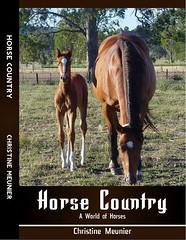
My Debut Novel, Horse Country
If you have the patience and organisation to be able to send out review copies prior to your book’s release date, you can be rewarded with reviews on the date, or even before the book is available for sale.  This can be a great way to build interest and boost sales.

Alternatively, you can set a competition (on your website, Goodreads or Facebook page) and provide free copies to a limited number of readers on release date on the condition that they provide an honest review.

If approaching people about reviews, consider:
-         Have they reviewed other books in a similar genre?
-         Are they likely to enjoy your story?
-         Do they ‘consume’ books, resulting in a quick review after you’ve provided the story to read?
-         Will they post on mediums you require, e.g. Goodreads, Amazon, LibraryThing, a personal website?

Many readers love to receive a book prior to it’s release date and will work hard to have it read and reviewed for you as an author, in time for your much anticipated release.  Consider the value that seeking out reviews can provide for your latest release – or even an older release that needs a boost!

What book have you had the privilege of reading prior to release day?  Interested in reading Christine's next adult horse fiction due for release in 2016? Leave a message!

Sunday, April 10, 2016

If You Write It, They Will Come

Lately, with the advent of spring and opening day of baseball season in the air, I'm reminded of one of the most popular baseball movies--Field of Dreams. I think what made this story so compelling was the strong faith and, yes, hope demonstrated by the main character. Based solely on a voice he hears, he plows down his cash crop corn field and builds a baseball playing field. To what end? his friends, neighbors, even family ask. At first, even he doesn't know why. That's where the faith comes in. I'm not in this instance talking about faith in the scriptural sense (although there are clear parallels in the movie), but instead faith in that voice in his head that says to step out and do something absurd, risk exposing oneself to ridicule, but do it with conviction and believe that the end result will make it all worthwhile.

How is writing a book any different from building a ball field in the middle of nowhere? Authors have to listen to that voice in their heads, the one that won't be ignored, then step out and do something so crazy your friends shake their heads, maybe even discourage you from continuing. When you put your writing out there, you are exposing the story, the characters, the writing, indeed yourself, to judgement from any and all. Who with a lick of sense would do such a thing? Writers of faith. Writers who believe if they write the story, the readers will come. Writers who have a story to tell that won't shut up and leave them alone. Writes who are willing to risk their "cornfield," whatever that may be, to do what they must do.

Now I have a story of faith to tell. I had told myself I was through with horses after a long, long run of bad luck, heartache, and financial depletion through vet bills. Quite a shame, really, since I've got a warm barn, an arena with good footing, a large stock of hay and years working with horses. But recently I started to let the idea of getting another horse seep into my consciousness. "Just for fun," I told myself, I started looking at horses for sale, but what I wanted was either out of reach or would be sold out from under me before I had a chance. Once, a major blizzard hit the day I was to go try one. It was as if fate were pushing me away, pushing in another direction. "If you build it, they will come" is one of the most repeated, often parodied tag lines from the Field of Dreams movie, but in the end it is something we all want to believe. If we prepare, if we believe, the cosmos will put the pieces together in just the right order. And that's what happened. Out of the blue, the horse came, but not at all in the way I'd imagined. Quite unexpectedly he fell in my lap--a beautiful 17 hand Thoroughbred, a lovely mover with a kind, forgiving nature. But just how this happened--I'm saving that bit of the story for another time...stay tuned!

Wednesday, April 6, 2016

Fiction Versus Nonfiction


I recently finished reading two books. One was a nonfiction book about horses, and I came away with the thought of “Really? What kind of tale is this author spinning?” The fiction title was a mystery and the protagonist was a Realtor. From what little I know about buying and selling real estate, that part of the fiction book was completely based in fact.

It is obvious that the line between fiction and nonfiction can be, and often is, blurred. But as an author who writes both, I sometimes wonder just where that line is. Every author has a unique writing process, but certainly a nonfiction book needs to be steeped in fact. Even if the author knows the subject like the back of her hand, research should be done to confirm lesser known facts. For the reader’s benefit, the ideas need to be presented logically, with a little entertainment, such as a good story that is relevant to the facts, thrown in for good measure.

While the writing process for nonfiction can be methodical, with the author checking off each of the points he or she wants to make, fiction can be a wilder ride. From the invention of characters, scenarios, sometimes even the invention of entire towns, the process can be challenging, but a lot of fun. The inventions, however, need to have enough fact in them that the reader is not taken out of the story in disbelief.

In these ways, nonfiction can have an element of fiction, if the author is telling a story to illustrate a point, and fiction must have enough fact to make the story believable. That can be a thin line that is hard to follow, and I applaud every author who gets it right.

I have written many books, and looking back, I have done better weaving all of this together with some books than with others. I am thrilled to report, however, that I seem to have gotten it right in my newest equestrian mystery, The Fame Equation, which has been selected as one of three finalists in the mystery category for the IBPA Benjamin Franklin Book Awards. 

In a few days I will head to Salt Lake City in a day or so to see if this book, the third in the series, has been selected for a gold medal, or a silver one. In either case, I am so honored by this recognition. This is the sixth award for the series, which has also been optioned for film and television. After so many, many long months of mixing horse facts with the lives of my fictional characters, it is a wonderful feeling to know that in the end, the balance was right.

In a final note, I will be at the Midwest Horse Fair in Madison, Wisconsin April 15-17 teaching people about ground driving and riding in balance. Hope to see many of you there!

––

Lisa Wysocky is an award-winning and bestselling author and horsewoman who educates people about the horse. She also is a registered PATH instructor who consults with therapeutic riding centers across the country about their hoses and horse herds. Find her online at LisaWysocky.com


Sunday, March 27, 2016

The "Re-reads" Group

                                                                    Milton C. Toby photograph
By Milton C. Toby

I tend to lump fiction into four very general categories:
  • "Re-reads," the books that I return to from time to time;
  • "One-timers," the books from favorite authors, books that I wait for, devour, and then set aside;
  • "Airport" books, those that I pick up at airport bookstores because I need something to read during a layover and usually leave in a hotel room;
  • And, finally, the "short-stops," those books that I start with great expectation, but give up on because they cannot hold my interest beyond the first few chapters.
Heading the list of my "re-read" authors is Sir Arthur Conan Doyle. Every two or three years I start with A Study in Scarlet (the first appearance of Sherlock Holmes, published in 1887) and work my way through the novels and short stories to The Adventure of Shoscombe Place (the last story, published in 1927). For readers unfamiliar with the Holmes canon, horses turn up from time to time, notably in Silver Blaze, in which Holmes and Watson thwart a scheme to kidnap a prominent Thoroughbred and use him as a ringer in an important race.

 
Author Robert Ludlum
Running a close second to Arthur Conan Doyle is the late Robert Ludlum, whose thrillers have sold millions of copies. Ludlum passed away a few years ago, but his writing franchise is going strong, operating under the byline "Robert Ludlum's  (insert book title here)." I don't return to the franchise books often, but I take one of the Ludlum originals off the shelf whenever I need a dose of international intrigue and conspiracy theories.

A few days ago, by accident, I came across a couple of radio interviews Ludlum did in the mid-1980s with Don Swain. Swain hosted "Book Beat" on CBS Radio for over a decade and his program attracted many of the best writers around in those days.

Ludlum's first book, written after he turned 40, was The Scarlatti Inheritance, an immediate bestseller that made him an international sensation. That first book was easy, Ludlum told Swain, but then things changed: "It's the hardest thing in the world to write the second book. The first one was easy. We've all got a story to tell. But writing the second book, that's the difference between being a professional and not being a professional."

Ludlum had this to say about the necessary elements of good fiction:

  • Theme. He was not talking about a theme for a writer's book in progress, but instead an overarching theme for a writer's work. For Ludlum, that theme was a general distrust of international financiers and a love of conspiracy theories.
  • Characters. Ludlum typically wrote stand-alone thrillers, with a new cast of characters each time. He did not like the idea of a series, because of the risk that an author might get comfortable with a character and not put much effort into development. He acknowledged, though, that his best known character, Jason Bourne, appeared in a three-book series.
  • Plot. Ludlum's books have extremely complex plots. For a good book, he said, the path from Point A to Point B is never a straight line.
  • Pace. Ludlum's early work was in theater, as an actor and not as a writer. He recognized the importance of pacing as a companion to plot, however. You've got to structure the first act so people will stay for the second act, he explained, and the second act so people will stay until the end.    
Bill Straus photograph
Swain's interviews with Ludlum, and a host of other prominent writers, are archived here.

On a personal note, this will be my last post at Horse Crossings. Best of luck to my colleagues in their writing endeavors. It's been fun!


.


Monday, March 21, 2016

Setting Themes or Morals for Your Horse Story


http://www.amazon.com/Christine-Meunier/e/B00D5SE2FS/For the Free Rein series which is aimed at 8 – 12 year olds, I like to have a theme or moral of the story running throughout each novel.  Alongside this, my focus is to provide educational facts about horses in each story and cover a different area of horse care.

I want the stories to be enjoyable for readers, but to also have a suitable ending, a lesson learned and some facts picked up along the way.  I believe a particular theme or moral to stories for younger readers can be a great thing to focus on.

If you are considering writing for the younger reader, perhaps this is something you would like to consider including, too.  Because the Free Rein series books cover horses and faith, I often try to tie the title in with a horse lesson and a faith lesson.  It can be a nice way to round out the story and to help focus the theme of the book on what it is called.

Do you enjoy children’s stories with morals attached?

Sunday, March 13, 2016

I lLove You, I Just Can't Live With You

I took a check and watched as a young woman loaded the mare I raised from a weanling on to her trailer and prepared to drive away. I hurried to my car so I wouldn't have to watch her leave and  because I felt that tell-tale prick behind my eye and my throat clamping shut that signaled I was about to sob. Not a polite wiping away of a stray tear, but a gut wrenching, oxygen gulping bawl. You see, even though the mare was going to a lovely new owner and it was the right decision, I still had a hard time saying good-bye. I loved the mare. She has a unique personality and great talent, but she was not a good fit for me. It only took me about eight years to come to that conclusion. Not unlike a marriage or family, our relationship with a horse can be full of love, but that doesn't necessarily mean we can harmoniously live together. This mare was sensitive and intense, a workaholic and a very strong leader. I, in turn, have become a much more casual rider as a result of a demanding work schedule and just "old age." I wanted to enjoy my time together with an equine partner and not have to work or think so hard. Often times a horse comes into our life because we were meant to learn something only that animal can teach. And learn I did from this red mare. She taught me to be straight, how to let go, to perfect my timing, and to let her carry half the responsibility for the ride because she demanded perfection from her rider. I learned my lessons from her, sometimes the hard way, so now another horse will benefit from my improved skills. And another rider--a more accomplished and younger one--will no doubt benefit from teaming up with this special mare and hopefully together reach their full potential together. People come in and out of one's life and so do horses, but never without leaving something behind. But it's never easy saying good-bye, so instead, I'll just say "thanks" to my dear, red mare.

Friday, March 11, 2016

When It All Comes Together

Endings are notorious for being difficult. Even some notable writers are notorious for lacking good endings in their books. Whether you're a professional or a struggling part-time writer, a good ending is crucial. After all that time spent on your book, you want the ending to do the project justice, and create some sort of resolution.

Funny thing, I've never struggled with endings. Beginnings are the bane of my existence as a writer. In pretty much everything I've ever written, I've fiddled with and scrapped beginnings, reworked them, and completely redone them. Endings have come easily. I've always had a firm idea, fairly early on in the story, of exactly how the ending would go down.

Except for this last project, Take The Man, my long-standing (long-suffering?) WIP and the grand finale of my adult equestrian series that I started when I was 16 years old. Almost 8 years of work has gone into this trilogy, and while it didn't land me a deal with a major publishing house or allow me to quit my day job, it at least pays for my yearly vacations. I owed it to my readers, my characters, and most of all, myself, to give it a fitting end.

My first novel, I flew by the seat of my pants, and every day was a surprise. My subsequent two novels (one of which is a non-horsey stand-alone) were meticulously outlined. And Take The Man? I wrote a blurb, but couldn't outline it. I had only a vague idea of where it was headed. I was back to the fly-by-the-seat-of-my-pants approach. I gave up control and let my characters surprise me, and they did, in beautiful and painful ways.

I did not write consistently over the winter, and I wondered if I would even be able to meet my goal of finishing it before spring, but 4 weeks ago, I began to build momentum. Suddenly, I was able to focus, to sit and write for longer periods of time. I was getting work done, and my brain was working. I still wasn't quite sure how it would end, but at least there were possibilities in my head.

More surprises occurred. New characters came to life, and established characters made changes and found happiness. Even heartbreak had a resolution. I was on a roll, and soon I knew how it would end.

I'm glad to have wrapped my series up. I'm at a different place in my life now, and it's time to take a break from writing, and then maybe write something completely different. But these last few weeks of writing reminded me how good it can feel when you're humming along on a project and everything makes sense.

In the end, being tired of this project actually made me a better writer. It made me less controlling, and my characters took over, guiding me to a fitting end.

Sometimes they just know best.