Showing posts with label Horse books. Show all posts

Monday, October 2, 2017

A New Author Website

by Christine

Well it has been an awfully long time since we've posted here!  I just wanted to share with you all that I have a new author website over at http://www.christinemeunierauthor.com/

Why not head along to take a look? :)  I have combined my two book websites into one.  Now you can find all of my horse related works in the one place!  This includes:
  • horse books for children
  • horse books for adults
  • non fiction horse books


In writing news I am currently working on the seventh book in the Free Rein series for young readers.  And I am planning to release the sixth book in the Thoroughbred Breeders series for adult readers this month!  And if you're a horse book author - or aspiring to be - don't forget about the Equine Authors website for hints and tips with regards to establishing your author presence online! :)

Monday, October 3, 2016

Pay it Forward

by Christine

As an equine author, do you invest time in helping other authors? Or is your sole focus to get the word out about your books so that you can (hopefully) make sales?

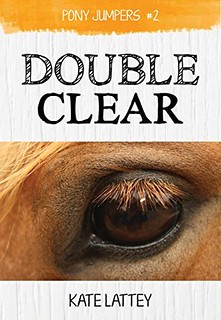
I have Loved Reading the Pony Jumpers books by Kate Lattey Recently!
Pay it Forward: I have Loved Reading
the Pony Jumpers books by Kate Lattey Recently!
In whatever industry you’re in, it is beneficial to look out for the success of others. We should each make it a priority to promote others’ work that we have enjoyed or help to spread the word about a new release. It isn’t difficult to do and chances are, these authors will be so appreciative, they’ll return the favour.

Amongst your busy schedule, set aside some time to help promote other authors. Perhaps you can provide them with a review once you’ve finished a book that you really enjoyed. Or maybe you can help share a link of a new release. Or perhaps you can provide them with an encouraging comment on their personal blog.

For those who are so inclined, you could even create a section on your blog to help promote other equine authors. Whether you make up questions for an author interview or you post excerpts from new releases, this can be a great way to generate some extra content for your blog that doesn’t take you a lot of writing time.

It doesn’t take a lot of time to help someone else in their endeavours to be a successful equine author. As you do so, hopefully they’ll be inclined to return the favour. Either way, it is worth setting aside a little time each week or month to encourage others.

Monday, July 11, 2016

Co Authoring Horse Stories


Perhaps it’s your desire to break into the world of writing horses, but you’re not sure where to start.  Or you’d like to do something different to further your writing career and attract a different group of readers.  Have you considered collaborating with another author?

I have recently finished reading City of Angels, which was a free download on Kindle.  It was appealing because of one author Tracie Peterson – I really enjoy her works!  I am not unfamiliar with James Scott Bell, either.  These two Christian authors have worked together to bring this story to life and I really enjoyed the read!  From having finished this novel, I would be tempted to look into other works by James Scott Bell, because of my interest in novels by Tracie Peterson.

Co Authoring Horse Stories: What do you think?
If two horse authors have a readership base, chances are some of these fans may overlap, but many won’t.  Particularly if you write about different aspects of horses – children’s books, teen stories, adult novels, equestrian, racing – whatever it is, you may find that co authoring a novel is a way for you to each compliment the other author's writing and grow your readership base.  Food for thought!

With access to many people over the internet, working together on a story wouldn’t necessarily need to be done in person.  As long as communication lines are kept open, authors may find that they can develop ideas for a plot, themes and characters via email or chat.

An added bonus could be that two creative minds can develop a strong story that is entertaining and informative with a unique twist.  And when it comes to marketing the story, there will be two lots of ideas about what works for gaining interest!

What novel have you read and enjoyed that was co authored?

Monday, April 18, 2016

Seeking Reviews for (New) Releases


by Christine.

It’s exciting to release a new novel – all of your invested time, hard work and research has come together!

It can be disappointing to release your book and find that nothing is then happening; people may be reading, but you aren’t seeing any feedback in the form of reviews.  Seeking reviews for your novel can be a great way to increase anticipation of a story, to give you feedback and to gain new readers.

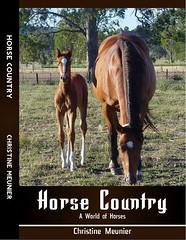
My Debut Novel, Horse Country
If you have the patience and organisation to be able to send out review copies prior to your book’s release date, you can be rewarded with reviews on the date, or even before the book is available for sale.  This can be a great way to build interest and boost sales.

Alternatively, you can set a competition (on your website, Goodreads or Facebook page) and provide free copies to a limited number of readers on release date on the condition that they provide an honest review.

If approaching people about reviews, consider:
-         Have they reviewed other books in a similar genre?
-         Are they likely to enjoy your story?
-         Do they ‘consume’ books, resulting in a quick review after you’ve provided the story to read?
-         Will they post on mediums you require, e.g. Goodreads, Amazon, LibraryThing, a personal website?

Many readers love to receive a book prior to it’s release date and will work hard to have it read and reviewed for you as an author, in time for your much anticipated release.  Consider the value that seeking out reviews can provide for your latest release – or even an older release that needs a boost!

What book have you had the privilege of reading prior to release day?  Interested in reading Christine's next adult horse fiction due for release in 2016? Leave a message!

Monday, March 21, 2016

Setting Themes or Morals for Your Horse Story


http://www.amazon.com/Christine-Meunier/e/B00D5SE2FS/For the Free Rein series which is aimed at 8 – 12 year olds, I like to have a theme or moral of the story running throughout each novel.  Alongside this, my focus is to provide educational facts about horses in each story and cover a different area of horse care.

I want the stories to be enjoyable for readers, but to also have a suitable ending, a lesson learned and some facts picked up along the way.  I believe a particular theme or moral to stories for younger readers can be a great thing to focus on.

If you are considering writing for the younger reader, perhaps this is something you would like to consider including, too.  Because the Free Rein series books cover horses and faith, I often try to tie the title in with a horse lesson and a faith lesson.  It can be a nice way to round out the story and to help focus the theme of the book on what it is called.

Do you enjoy children’s stories with morals attached?

Wednesday, August 26, 2015

A Day in the Life of an Author

The day in the life of an author is not what most might think. Of course, it varies from author to author, just as the daily routine might vary from one accountant to another. And, when you mix horses in, the daily schedule takes on a life of it’s own.

I can’t speak for other authors, but I know that I need to write in the morning, when my mind is fresh. Usually, I do a quick read through of yesterday’s work, then dive right in. If I am writing nonfiction, something such as a book on horse training, I have an outline to follow. Those of us who publish with traditional publishers have most likely sold a proposal, a detailed outline of the proposed book, to the publisher, and the author needs to follow that outline. Nonfiction is a little easier on my brain, as I write facts, hopefully in an engaging narrative.

While other authors might outline their fiction, I do not. I know it sounds strange, but writing my Cat Enright mystery series is almost like having a conversation with my characters in my head. I sometimes even have disagreements with my characters about how the story should unfold. My saving grace on that front is that I have heard other fiction authors say the same thing.

http://www.amazon.com/Fame-Equation-Enright-Equestrian-Mystery/dp/1935270370/ref=sr_1_1?ie=UTF8&qid=1440604876&sr=8-1&keywords=the+fame+equation


I usually write for several hours, or until lunchtime. Then it is time to get down to the business of being an author. My booking and literary agents usually have sent some emails for me to respond to. When that has been dealt with I perform the necessary evils of social media and updating my website. I look over any contracts for speaking, horse clinics, writing, or “rights” sales (audio, trade paperback, foreign, etcetera), and sometimes speak to my co-authors about contracts and offers. In addition to horse books I sometimes co-author or ghostwrite autobiographies with well-known people. My books are published with a number of different publishers, so I take calls or answer their emails as well. On occasion, there is an interview to do.

By mid to late afternoon I am ready to head to the barn. Sometimes I teach a riding lesson or two, other times I feed, mow, groom, fix fences, haul hay, do groundwork, or even ride. After an early dinner I read over my morning’s work and make changes, then create a to-do list for my writing for the next day.
http://www.lisawysocky.com


Of course, there are interruptions to this basic schedule. Conferences, clinics, book signings, and speaking engagements (and the travel to and from) happen regularly. A horse might become sick, or I get edits back from my editor and hunker down for several days to get through them. Sometimes I find I just need to take a morning to pick up and organize the chaos that has developed around my writing space. But somehow, books are turned in on deadline, horses get fed, and I can’t wait to get up in the morning to start it all over again.

Wednesday, June 17, 2015

Show Barn Blues


Wow! I am really bad at editorial calendars! 

You're supposed to decide what you're going to write, write it, edit it, and release it, right? Simple. For normal people.

Here's what I decided to do instead.

Write a novel.

Shelve it.

Write another novel, using characters from the shelved novel.

Decide I still really liked the shelved novel.

Edit the shelved novel to publish first.

Plan on changing second novel to make room for changes based upon the shelved novel.

DOES THIS MAKE SENSE?

Of course it doesn't.

I'm a writer and I don't have to make sense.

I know, I know, excuses, excuses. But this way you get two novels out of it, so I'm not sure what grounds anyone has to complain...

So here's the deal.

I based Show Barn Blues on big boarding stables I've worked at.
I'm working on Pride, the sequel to Ambition, featuring characters and plot lines from Show Barn Blues, a stand-alone novel that I wrote last summer but didn't publish. The thing was (as I wrote at my blog back in May), there were events and sequences in Show Barn Blues that I simply couldn't replicate in Pride. The sub-plot of developing farm land into golf courses, and what drives a trainer to continue in the business long after the thrill has gone, were too big to wedge into Pride, which is really about giving up control. Those two things don't blend at all.

I wanted to release Pride first because so many people have asked for it, and I respect that, but Show Barn Blues really has so much to offer. Grace Carter, a middle-aged hunter/jumper trainer, has given her life to the show business, trying to escape a childhood nightmare that never would have happened if she had stayed in the arena as she'd been told. At the same time, she is preserving her grandfather's old farm, the scene of her happiest memories. She's caught in the middle, trying to save the land that she wants nothing to do with. As developers circle her farm, Grace is trying to somehow salvage her future while accepting her past. Meanwhile, a new trail-riding boarder, Kennedy, is determined to change things for Grace and her arena-bound students.

This is a sample of Grace's point of view:

***

The next day, Colleen cancelled her Sunday evening lesson to take Bailey on a trail ride with Kennedy. I was already furious when Missy Ormond showed up to ride in a pair of jeans, which was strongly discouraged — I liked my students to have a professional appearance at all times — and I nearly spit nails when, while wiping off her tack after her riding lesson, she suggested that we all have a group trail ride in a few weeks.

I had been mulling over a new cancellation fee for all riding lessons. “What’s that?” I snapped, but Missy was so excited, she didn’t notice my tone.

“With a barbecue,” she went on enthusiastically. “We could use that old fire-pit, and roast marshmallows. Or make s’mores.”

“What old fire-pit?” I knew exactly where my grandfather’s fire-pit had been dug and bricked, but nobody else knew about it. Rather, nobody else had known about it. Was Kennedy going to dig out all of my skeletons and parade them around in front of me? I put things deep into closets for a reason.

Missy didn’t notice my sudden tension. She hopped down from Donner and ran up her stirrups. “It’s out by the lake,” she explained. “We could all ride to the lake and maybe the grooms or anyone who doesn’t want to ride can take out supplies and wait for us with the Gator. It’s an easy ride. It’s practically a road. Did you know there’s a road out there?”

“It’s an old Indian trail,” I muttered, and everyone in the tack room started clamoring to see it, unable to believe I had denied them the opportunity to ride on a real live Indian trail. “That lake has gators in it,” I added. “And moccasins.”

“So does all the water in Florida,” Missy said, cocky after a good ride. She’d gotten Donner around a three foot nine course without any dirty stops at all — Donner was known for dropping his shoulder when he did not feel that his rider was paying sufficient attention, sending said rider tumbling into the fence while he went the other way. “I might not have lived here my whole life, but I know that. Have you been to Gatorland Zoo? I held a baby gator there. It had its mouth taped shut.”

I had, but when I was ten or eleven, not when I was forty-four years old and the mother of three. “The gators out at the pond will not have their jaws taped shut,” I reminded her. “And horses don’t like them.”


“Oh, they’ll swim away when we come,” Missy laughed. “Kennedy says they’re afraid of horses.” She turned and led Donner back to the barn, his hooves ringing on the concrete pathway, the one we’d constructed over a perfectly good pathway of sand so that the boarders could keep their boots clean. I’d gone to insane lengths to provide affluent equestrians with a picture-perfect equine utopia, and now they all wanted to do was mess around in the woods and look at alligators. One had to wonder what the point of anything was.

***

This story is uniquely Floridian, and uniquely equestrian (as I hope that all of my stories have been). Whether you've devoted your life to horses or you've been an enthusiast, you'll recognize Grace, Kennedy, and the cast of boarders and students who make up the show barn at Seabreeze Stables. And if you've ever seen a "coming soon" sign go up in front of beloved woodlands, you'll be ready to fight alongside Grace to save the farm and everything that it stands for.

And I promise you, once I've finished Show Barn Blues and you're all distracted reading about Grace and friends, I'll finish Pride. Grace meets Jules. Oh, the fireworks.

Wednesday, June 3, 2015

The Benefits of Thinking Like a Horse

by Lisa Wysocky

Predator/prey differences aside, there are many differences between horses and humans. Horses hear higher and lower sound frequencies than humans do, and they can hear sounds that generate up to half a mile away. People, however, can better isolate where those sounds are coming from.

Humans have eight to ten thousand taste buds, while horses have up to twenty-five thousand, to better differentiate safe plants from those that are toxic. A horse can smell his owner up to three hundred feet away, and if the temperature and wind are right, from much farther away than that. Other than food, humans are lucky to smell something that is thirty feet away.

As humans, we try to impose our human experiences onto horses, and that is an impossible task. From the way horses process thought, to how they see, even to how they process touch, theirs is a world apart from the human experience. We then, have to become more horse-like. We have to step up to try to understand the horse’s experience from his or her viewpoint. Horse spook at a plastic bag one hundred yards away? It helps to know that horses cannot judge distance as well as people can. When we start thinking like a horse, our reactions––such as praise, reassurance, or discipline––to their behavior then becomes more appropriate. 


 I find it is the same when I am writing. When I write, I try to think like my readers. How will an average reader interpret a scene, or a character’s line? Will my description of a round pen, for example, make sense to a person who does not know about horses, yet not be too elementary for those who do? As a reader, I would much rather have the comfort of a concise, accurate, and thorough description of an object or a process, than have the “Huh?” experience. So, that's what I try to write.

I have been very fortunate to have my nonfiction books about horses and horse training diligently edited by people who are seasoned horse people, because people who are serious about their equine friends are the ones who will be interested in those books. On the other hand, I am equally as fortunate to have a woman who knows little to nothing about horses edit my Cat Enright mystery series. Even though I try to think like my readers when I write, I sometimes forget that not everyone knows what a fetlock is, or why a character might pull up on a saddle pad so it does not lay down hard and flat across a horse’s withers.

As readers and writers, and as people in general, it probably is a good idea to consider the end user. Whether it is a conversation with a teenager, a report sent in to a supervisor, or a trail ride with your favorite horse, considering their experiences, thoughts, behaviors, and emotions, will always make your life experience easier, and more fulfilling.

Monday, May 18, 2015

Try to get it Right the First Time


Do you Research for Your Writing?
Although a lot of what is written for enjoyment is fiction, there are areas that should be factually correct.  I think this is especially true for horse books where people read to enjoy, but also to learn about an animal they love.

It’s important that what they read is information they can put to use with their own horses - or once they get a horse!

Perhaps it’s tempting for someone writing a book to not double check information they’re not 100% certain of.  A book is written once and then provides you a return any time it is read or bought – it is worth getting it right the first time.

With our current digital age, the great news is that if somehow facts change and your book is no longer current or correct about a particular thing, you can easily update an eBook and republish it.  Do your homework and try to get it right from the start, but keep up to date in your field and don’t shy away from revising an edition of your book if you need to.

Wednesday, May 6, 2015

Writing and Riding––and Free Books!

by Lisa Wysocky

Writing about horses is a lot like giving riding lessons. Both make me think through a sequence of events. Both, over time, require me to achieve progression, and both allow me some creative freedom.

If a rider has trouble keeping her heels down, I might instead ask her to point her toes to the sky. Trouble posting the trot? Try a two-point, then dropping into the saddle before bouncing up, rather than sitting and then trying to get up. If a fictional character needs a new horse, I can invent a way to put the perfect equine into the story. Or, I can find a creative way to give a horse an interesting character quirk that ties into the plot.

I am currently finishing my third equestrian mystery (The Fame Equation, fall 2015). It has been wonderful to reconnect with my characters and help them problem solve through another murder. My characters also help stretch me out of my equine comfort zone from time to time, so it has become an educational process, too.

Why would an otherwise healthy horse blow bubbles in a water bucket, or lie in an odd position? What does a circling behavior in the pasture really mean? Those and a thousand other questions have to be researched and solidified in my mind before I can distill it down to a sentence or two, and still make it interesting for the non-horsey reader.

I research everything, even things I “know,” just to be sure. For the most part I am right, but the research often broadens my scope of knowledge, or adds one new bit of information that I can then use to move the story along.

When I finish this last edit of The Fame Equation, I will once again lose that intimate connection that an author has with her characters. Fortunately, my Cat Enright mysteries are a series, and I will soon enough be able to pick up the connection with them in a new adventure.

I have been fortunate that my series has won a number of awards, and thrilled that it has been optioned for film and television (fingers crossed). But, the mechanics of writing it have made me a better riding instructor, and have made me a better horse person.

In preparation for the fall release of The Fame Equation, my publisher has agreed to send readers of this blog a digital kindle or epub file of the first two books in the series, The Opium Equation, and The Magnum Equation. There are strings however (aren’t there always?)

1. The offer is only good through May 12, 2015
2. The publisher strongly hopes the reader will write an honest review on Amazon.com, BN.com, Goodreads.com
3. The files must not be shared with anyone else

I am thrilled with this offer, and hope you will be, too. To request your files, send an email to cooltitles@comcast.net with your name and the file format that you need.

Until next time: happy reading!

Lisa


Wednesday, April 22, 2015

A Writer-Friendly Lifestyle

by Natalie Keller Reinert

When time grows scarce, ideas grow like weeds.

I'll admit it, I haven't been writing much lately. Life just feels a little insane. Starting to work a day job, instead of puttering from one freelance assignment to the next, was supposed to make things easier. Thing was, I still had too many freelance assignments, and I was putting those off at night because I had "worked" all day.

(I have to put work in quotation marks because fiddling with papers at a desk, although technically work, was hardly using the parts of my brain that I used for writing. I was worn out with boredom, not with the actual job.)

Horses on the brain. That's me.
So while I was glaring at my work computer screen, or coming home at night and crashing on the couch to do some serious vegging out with The Unbreakable Kimmy Schmidt, of course I was having all kinds of ideas. Since I wasn't writing anything, my creative side was going haywire.

I was thinking about the next eventing novel (the follow-up to Ambition), the next Alex novel, this middle grade and/or young adult book Kissimmee Katie that I've been playing with, even DREAMING a plot loosely based on a book I started writing two years ago and put to one side. In the dream, the book was published, a beautiful blue paperback with silver lettering, and it had a new title that I liked much better than the working title. I made a note of it in my phone - A Door Opens - and went on vegging on the couch.

I know! My inner muse is calling and I'm not picking up!

It became really obvious that this 8-5 office jazz was not good for my creative side. The boredom was draining all my interest in writing, even while my brain was screaming ALL THE IDEAS! I needed a writer-friendly lifestyle, pronto.

So, I'm making a change. I decided to change jobs for one that's more fun, involves more interaction with people (something I desperately need as a writer!) and has less routine hours. I'm wrapping up most of my freelance work, including my travel business, which has been a huge part of my life for the past two years but has also taken a tremendous amount of time. 

The thing is, ideas are just one thing. They're the easy part. The writing, the fleshing out of characters, the quirks of personality, the inflections of speech, those are the hard bits. For that, you need stimulating atmospheres, people to talk with, conversations to listen to, individuals to observe. I find that people are hard. Horses? I can create a shedrow full of unique and recognizable horses in ten minutes. For people I have to get out there and mingle.

(Or at least watch from a safe distance.)

So here goes nothing. New job, new lifestyle, new schedule -- and hopefully a load of new books! I'm already writing more just out of anticipation of the change -- pages and pages of Pride, the sequel to Ambition, have materialized this week!