Early this morning when I was out feeding the horses, I heard squawking and calling from an unseen flock of birds just over the tree line. It was a familiar sound, but only in autumn. It was a sign that the time was indeed changing no matter how warm the weather felt. The birds knew and were gathering. My area in the Mid-Atlantic seems to be a fly-over state in the migratory path of many birds heading south. I enjoy hearing their passing calls to each other overhead and laugh at my terrier who maintains her air defense perimeter over the farm by running and barking at them. Other signs abound. The tips of some leaves are turning yellow, the corn stalks are dry and golden, the dark falls sooner and much faster, and the horses' coats have lost their sheen and are becoming fuzzy. Time speeds up for me each autumn. As if time is on a bobsled race downhill to December, I'm always a month or so behind.
This year, I'm preparing. I've decided that I will simplify my life as much as humanly possible in this era of plugged in/turned on and instead unplug. I'm avoiding Facebook (the monstrous time vampire that it is) and other social media robbers of time. I've already given up television, but now I'm going to take a hard look at all my activities and ask whether it feeds my spirit or helps others (or is necessary to sustain life...I'm not crazy). If not, it's going. I need more time for writing and in order to write well, I need more time for reflection. That means feeding creativity with reading good books, trying new things, learning, and all the while maintaining a wonder at the world and our surroundings. Change is hard. It is sometimes exciting, sometimes stressful. I'm taking it slow. I'm slowing that accelerating bullet train that rushes to the end of the year and instead taking a leisurely stroll, hoping to see something new along the way. Care to join me?
In the spirit of change, here's the new cover of False Gods. Hope you like it. I'm working on a sequel, taking up the story from a different character's point of view. Please visit my website at www.lrtrovillion.com and keep in touch.
Showing posts with label horses. Show all posts
Sunday, September 25, 2016
Wednesday, August 24, 2016
The Farm Detective
The everyday running of a horse farm is both exciting and
challenging. From the lawn tractor that won’t start (yet again) to the mare who
is mysteriously losing hair on her face, to the odd looking weed that has
suddenly sprouted in the center of the pasture, there is always at least one ongoing
mystery on the farm.
From creative thought to research to problem-solving, writing
is much like farm management. First, a problem, conflict, or potential threat
has to be identified. On the farm it might be swarming bees, a lame horse, or a
leaky barn roof. In writing, it could be a murder, a romantic triangle, or even
the loss of a job.
The research phase involves the writer understanding the
problem enough to explain it to readers, and offering a plausible resolution. It
also involves the characters taking steps to manage the problem, or methodically
gather information toward resolving the conflict. In the barn, research might
take the form of different sprays to get rid of the bees, an internet
search or a call to a local county extension agent to identify the unusual
weed, or palpation of a horse’s leg to identify the source of the lameness.
Finally, the character or the horse owner has enough
information to make a decision that will solve the problem. The decision might
involve some trial and error, but eventually a resolution is found. The weed
turns out to belong to an innocuous branch of the mint family, the lameness
stems from a sore hip, and the bees, well, spraying a mixture of vinegar and
water around the barn seems to deter them.
Unlike mystery books, however, farm-based mysteries usually
do not involve a murder. But the thinking process that goes into each really is
very similar, and I have found that creative problem-solving on the farm also allows
me to then create some interesting plot lines.
One recent challenge was how to secure the barrels for our new horse obstacle so they did not tip over. After much research about safety, and a few trial and error attempts, we ended up packing tires around the barrels to create a stable obstacle for our Colby's Army horses and riders to navigate.
Farm challenges can be frustrating, but if you begin to
think of them as a way to develop a book idea or a story line, maybe some of the frustration
will turn into creativity. This week I have dealt with the non-starting mower, a
mare’s facial hair loss, unwanted bees, a leaning barn support beam, an
electric fence that does not want to turn off, and a few other odds and ends.
What have your farm or writing challenges been recently?
––
Lisa Wysocky is a bestselling and award-winning author of fiction and nonfiction, including the Cat Enright equestrian mystery series,
now optioned for film and television. She is also a therapeutic riding
instructor who consults with PATH and other centers about their horse
herds. Find her at lisawysocky.com
Wednesday, July 27, 2016
What I Wish I'd Known When I was Eleven
When I was young, all I could think about was horses. From the time I stole a tiny, plastic horse from the farm set at my nursery school (I was two), horses were my thing. After years of raking yards and many summers of lemonade stands I finally saved up enough to buy a pony when I was eleven. From there I moved up to an Appaloosa mare and began to compete. Since then I have trained, instructed, and shown successfully on a national level, although I sometimes feel my journey with horses is just beginning.
I have learned a few things over the years, however, so I
thought this might be a good time to share what I wish I’d known when I was
eleven. And, in reviewing this list, I found that it applies to books and writing, just as much as it does to a journey with horses.
1. It’s okay to ask questions. In fact, never miss an
opportunity to ask. It is the very best way to learn something that is
important to you. Ask more than one person, then compare answers to develop
your own opinion.
2. Set a goal, one that is doable. Your goal should not be
winning a class or writing a best seller, but more along the lines of improving your performance. You might not reach your goal,
but you will have learned something along the way. When you do reach a goal,
celebrate!
3. Prepare, then prepare some more. Think of every possible
scenario regarding your goal and walk yourself through all of
them, as best you can. Then do it again, and again.
4. As much as you can, read. Then read again, and discuss the ooks with others. There is
always something to learn.
5. Watch your horse and the people around you as he or she interacts with others. That is probably how the horse or human will try to interact with you. Then
adjust your demeanor accordingly. Some horses and people respond best to a soft voice,
others need firm, business-like directives. Make sure your horse and your friends are a good
match for you.
6. Always wear a helmet when you ride. Always. I have seen far too many
accidents, many at the walk and trot, to feel it is safe for anyone to ride
without one. (Okay, not much in common with books here, but it is important.)
7. Follow basic safety guidelines in all that you do. Most injuries happen out of carelessness. Keep your lead
rope from dragging on the ground, check your girth or cinch often, make sure
your equipment is in good condition. Constantly think the equine mantra: is
this safe?
8. Have fun, and try new things, such as a Dressage or barrel racing lesson, or reading a SciFi novel or a biography. It is important to expand your horizons in all that you do.
9. Make friends and encourage others. Then, your new friends
will encourage you, too. Remember that you do not compete against others, but
against your own best self.
10. It’s okay have a bad day. If you’re smart you will learn
something important, so smile and take time to digest what went wrong so you
can come back better and stronger the next day.
Just like you, I have learned so much more during my journey
with horses and books than just this. But I really, really
wish I’d known all of these things when I was eleven.
––
Lisa Wysocky is a bestselling and award-winning author of fiction and nonfiction, including the Cat Enright equestrian mystery series,
now optioned for film and television. She is also a therapeutic riding
instructor who consults with PATH and other centers about their horse
herds. Find her at lisawysocky.com
Wednesday, June 29, 2016
Excellence in Editing and Formatting
I confess that I have a number of pet peeves when it comes to the editing and formatting of books. As someone who edits for several small presses as well as independent authors, I understand the positive impact the good brain and eye of an experienced editor can have on the finished product. Wearing an author hat, we all read or see what we expect to see on the page, rather than what is actually there. If we expect to see, "The horse ran across the road," what might really be there is "The horse tan across the roas." We don't see what is obvious to another, because our author brain knows what is supposed to be there.
![]() |
| A recent labor of love. |
The proliferation of self-published authors who do not have the funds or take the time to hire an independent editor to catch these and other mistakes adds to the problem. When I as a reader am distracted enough by poor formatting, typos, and plot inconsistencies. I put down the book. And that's a shame, because most times, the story is worth reading. Lest you think I am too hard on authors, I include myself as one who has made the mistake of self-publishing a book that was not independently edited, a book that was not ready for publication. Lesson learned.
The fact remains that an author who publishes with a small independent press, or who self-publishes, has to deliver a product that is equally as well-edited and well-formatted as a book that has landed on a major bestseller list. That is hard to do, but the extra effort will be worth it. I also believe that this attention to detail in writing and producing books carries through to other areas of our lives. It translates to a spotless tack room, diligence in developing a good canter departure, and delivering a well-turned out horse. It's taking time to do the best you can and in taking pride in going the extra mile to make your product that much better.
Even with as many as seven edits, each of my books that were published by a major publisher has a typo or two. Those are seemingly inevitable. But I use well-edited books, expert grooming of horses, and beautiful riders to motivate myself to reach deeper, father, and higher in all that I do. What motivates you to do better?
-
Lisa Wysocky is a bestselling and award-winning author of fiction and nonfiction, including the Cat Enright equestrian mystery series, now optioned for film and television. She is also a therapeutic riding instructor who consults with PATH and other centers about their horse herds. Find her at lisawysocky.com
Wednesday, June 1, 2016
Summertime
Summer seems to be here in full swing in the South. It was
as if the weather went last week from a nice, cool, wet Spring to muggy, miserable,
energy-draining, 90-degree humidity in the blink of an eye. As a Minnesota native, I struggled
in the heat for many years until I finally figured out a while back that it was
okay to slow down on hot summer afternoons. Rather than ride in the afternoon,
I could write. Rather than muck stalls at noon, I could do that in the evening.
I’ll even admit to the occasional summer
afternoon nap.
Acknowledging and respecting the heat should be obvious to many, especially people who
grew up in warmer climates, but to a hard-working upper mid-westerner, that
lesson only came after years of letting the heat beat me up day after day. Of course,
when I finally decided to work with the heat, rather than against it, a horse
was involved.
I have long been an advocate of humans studying the horse to
learn about him- or herself. It’s what I teach in my clinics and it is a theme
that runs through many of my books. Horses study people all the time. It is
part of their safety system, and over time, horses have developed an innate
ability to tell if a human is mad, sad, tired, sick, angry, or joyful––all from
a hundred or more feet away. Why, then, could I not understand that if my horse
was hot, then I might be, too?
Then one hot Tennessee day a draft mare that I was caring
for became overheated while standing in her paddock under the shade of a
lovely, old tree, and something inside me clicked. Just maybe, it was too hot
for me, too. I brought the mare in, hosed her off and dried her, then put
her in a stall under a fan. Then I did the first smart thing I’d done in a
while and went inside.
Many people love the heat. Not me, but I have learned to use
it to my advantage. I write all year long, but I am far more productive in the
summer, when high temperatures force me inside. The afternoon heat removes all
temptation for me to perform yard work, mow the pasture, clean stalls, ride, fix
the fence, haul hay, and all the other outdoor activities people with horses regularly
do.
Instead, I get to write. I get to put down words that help
someone forge a better relationship with his or her horse, and words that hopefully
engage people as they help Cat Enright, my protagonist, solve a horse-based
who-dun-it.
Summer heat? It will never be my favorite thing, but I’ve
learned to make it work for me. How about you? Heat or cold. Which do you prefer?
––
Lisa Wysocky is an award-winning, bestselling author and
clinician. She is also a registered PATH instructor. Find her online at LisaWysocky.com,
or on Facebook or Twitter.
Labels:
blog,
books,
Cat Enright,
hear,
horses,
Julie Goodnight,
Lisa,
mystery,
reading,
Stacy Westfall,
summer,
tennessee,
writing,
Wysocky
Wednesday, May 4, 2016
Reading, Writing, and Resting
I just came off of a seven-week run on the road, seven weeks
of horse fairs and expos, clinics and book signings. I met people everywhere from
Montgomery, Alabama to Fargo, North Dakota, and it seems like most of the
62,000 people who attended the Midwest Horse Fair in Madison, Wisconsin. Whew!
Of course I came home with pneumonia, first in the right
lung, and several weeks later in the left. That will teach me to do too much. :-) Between bouts of
pneumonia, I was able to take part in a really fun video for Colby’s Army, a nonprofit
that provides therapeutic riding and other equine assisted activities and
therapies in Ashland City, Tennessee. I hope you’ll take time to watch the video, as it was a ton of fun to make.
With strict instructions from my doctor to rest, I have been
planning the fourth book in the Cat Enright equestrian mystery series. Her
voice is becoming more insistent in my head as I think of possibilities. All I
can say at this point is that it will involve a racetrack, and that a number of
Cat’s relationships will evolve to new levels. We are looking at a Fall 2017 pub
date, so Cat and I need to get writing! After six awards and a film/tv option,
the pressure is definitely on to deliver an amazing story. I have no doubt that
Cat will come through with flying colors.
I’m off to another nap. Read and ride well. Until next
month.
Lisa
––Lisa Wysocky is an award-winning author and clinician who
teaches people about the horse. Find her online at lisawysocky.com
Wednesday, April 6, 2016
Fiction Versus Nonfiction
I recently finished reading two books. One was a nonfiction
book about horses, and I came away with the thought of “Really? What kind of
tale is this author spinning?” The fiction title was a mystery and the
protagonist was a Realtor. From what little I know about buying and selling
real estate, that part of the fiction book was completely based in fact.
It is obvious that the line between fiction and nonfiction
can be, and often is, blurred. But as an author who writes both, I sometimes
wonder just where that line is. Every author has a unique writing process, but
certainly a nonfiction book needs to be steeped in fact. Even if the author
knows the subject like the back of her hand, research should be done to confirm
lesser known facts. For the reader’s benefit, the ideas need to be presented
logically, with a little entertainment, such as a good story that is relevant
to the facts, thrown in for good measure.
While the writing process for nonfiction can be methodical,
with the author checking off each of the points he or she wants to make, fiction
can be a wilder ride. From the invention of characters, scenarios, sometimes
even the invention of entire towns, the process can be challenging, but a lot
of fun. The inventions, however, need to have enough fact in them that the
reader is not taken out of the story in disbelief.
In these ways, nonfiction can have an element of fiction, if
the author is telling a story to illustrate a point, and fiction must have enough
fact to make the story believable. That can be a thin line that is hard to
follow, and I applaud every author who gets it right.
I have written many books, and looking back, I have done
better weaving all of this together with some books than with others. I am
thrilled to report, however, that I seem to have gotten it right in my newest equestrian
mystery, The Fame Equation, which has
been selected as one of three finalists in the mystery category for the IBPA
Benjamin Franklin Book Awards.
In a few days I will head to Salt Lake City in a day or so
to see if this book, the third in the series, has been selected for a gold
medal, or a silver one. In either case, I am so honored by this recognition.
This is the sixth award for the series, which has also been optioned for film
and television. After so many, many long months of mixing horse facts with the
lives of my fictional characters, it is a wonderful feeling to know that in the
end, the balance was right.
In a final note, I will be at the Midwest Horse Fair in Madison, Wisconsin April 15-17 teaching people about ground driving and riding in balance. Hope to see many of you there!
––
Lisa Wysocky is an award-winning and bestselling author and horsewoman who educates people about the horse. She also is a registered PATH instructor who consults with therapeutic riding centers across the country about their hoses and horse herds. Find her online at LisaWysocky.com
Labels:
authors,
books,
Cat Enright,
EAAT,
fiction,
horses,
Julie Goodnight,
Lisa,
Midwest Horse Fair,
mystery,
nonfiction,
PATH,
reading,
Stacy Westfall,
Th Fame Equation,
therapeutic riding,
writing,
Wysocky
Wednesday, March 9, 2016
Moving
Moving. Does anyone actually look forward to it? I have
spent the last month moving a therapeutic riding center forty miles. It seemed,
at times, like 400 miles. Volunteers and I packed up girths, saddles, hay,
horses, poles, barrels, storage sheds, water troughs, desks, filing cabinets, tires,
grain, supplements, bits, polo wraps, longe lines, and much more. Then we had
to unpack, inventory, put up fencing, and organize it all. Whew.
We are still a long way from being finished, but we are
functional. Well, almost. We need a mounting block and a wheelbarrow, an
electrician and a few more volunteers. I have no doubt that they will all
eventually arrive. The best part is that we are now in a large, 54-acre
facility with three creeks, a waterfall, riding and hiking trails––even a stage
and dance floor.
While the move was exhausting, I also found the new location
caused my creative juices to stir. As a mystery author, I always look for fun ways to involve horses, interesting people, and unique settings into
my stories. This location has all that and more. I began to have so many story ideas,
that I started to jot them down into the notes section of my phone. Now I am
intrigued to find out which of these ideas will turn into a book or a short
story. Pieces of other ideas, I am sure, will wend their way into a chapter or
two, as well.
Oddly enough, the farm is just a stone's throw away from where Cat Enright, the protagonist in my equestrian mysteries lives. When I started the series a number of years ago, I never dreamed I'd be involved with a therapeutic riding center that was so close to her fictional home.
As a writer, sometimes all it takes is a change of scenery
to kick start a project, or get a book to the finish line. As you can see, I
now have scenery galore! Feel free to follow the progress of the new farm on
Facebook. I think we have a lifetime of projects, and ideas, waiting.
If you are ever in Ashland City, Tennessee, stop by Colby's Army for a visit. I will probably be in a shady spot near the creek, writing.
Lisa Wysocky is an award-winning author, clinician, trainer, and riding instructor.
Find her online at LisaWysocky.com.
Wednesday, January 13, 2016
Updates and Revisions
My literary agent recently arranged for me to get the rights
to several of my earliest works back, a “work” being a book. This sometimes
happens when a publisher closes their doors or changes focus on the kinds of
books they want to publish. When a writer sells book rights to a publisher, the
publisher then has the “right” to publish the book for a specific time period
in ways, shapes, and forms that are detailed in the publishing agreement, but
that are also usually left up to the publisher.
This means an author usually has little to no say about what
the cover looks like, or the size of the type, or whether or not it ever
becomes an audio book. The tradeoff is typically excellent editing; the support
of sales, PR, and marketing teams; and often, a hefty advance in anticipation
of solid book sales.
One of the books I got back, Success Within, is eleven years old and used to be one of my most
requested books at my horse clinics and at horse fairs and expos. Used to be,
until I couldn’t get copies after the publisher sold out to a company that had
no interest in this particular title. Long story short, I am in the middle of
the last of the revisions of the book for an updated second edition, and it
should be out in March. If you are interested, my website will have news of the
actual publication date.
In doing the revisions, I was both thrilled and horrified to
find how much I had grown as a writer these past eleven years. Granted, I had
never been happy with the final edit of the initial book, but far beyond that,
I really hope this second edition will be much better written, and far more
engaging. I found some of the passages in the first edition simplistic and more
than a few thoughts poorly explained. Horror rushes through me when I think of
people reading this early work, but that feeling is mixed with huge pride that
the book touched a great many lives.
As writers, we all constantly work to improve our craft. We,
hopefully, learn to streamline words when needed, develop beautiful passages of
prose and place them in the right places, and both cut to the heart of the
matter and communicate our point in ways that leave the reader wanting more.
That is not an easy task and writers struggle every day to make that happen.
When it does, we rejoice! As time goes on, the idea is that we should improve
in this and in doing this rewrite, I am very glad to see that I have.
This process of updating and revising, and the strengthening
of my craft of writing, is not all that different than what most of us do with
horses. We constantly learn about the horse and find new ideas that will
improve communication. Periodically, we reject older methods for ones that work
better for the horse, and revel in the beauty of those rare moments of perfect
partnership. In that way, the craft of writing and the art of riding are not all that different.
Lisa is the author of My Horse My Partner and Horse Country, among many other books, and the award-winning Cat Enright
cozy equestrian mystery series, now optioned for film and television.
When not writing, Lisa is a therapeutic riding instructor who consults
with PATH and other centers about their horse herds. She splits her time between Tennessee and Minnesota.
Labels:
author,
books,
Cat Enright,
cozy,
editing,
editor,
fiction,
horse training,
horses,
Janey Evanovich,
Lisa,
Minnesota,
riding,
Rita Mae Brown,
Stacy Westfall,
Success,
tennessee,
writing,
Wysocky
Wednesday, December 16, 2015
If Horses Could Thank Us
by Lisa Wysocky
Every day I am thankful for horses, but as this year comes to an end, I know our horses are thankful for us. If they could, they would thank us for the food and shelter that we provide, because the reality is that unless a horse is born in the wild, they cannot provide this for themselves.
Our horses would thank us for the companionship of other
horses. Since horses are herd animals, the safety and friendship that other
horses provide is of utmost importance. They would also thank us for the
veterinarian and farrier care that we give through our trusted equine medical
professionals, as this is another thing that a horse cannot do for him- or
herself.
I am sure our horses would also thank us for the many
groomings we give them throughout the year, the care we take to be sure their
saddles and other tack fit correctly, and the trail rides we take them on.
If a horse could thank us. This is not a bizarre thought, as the realty is that they thank us
every day. Equine body language is subtle and complex, and their vocal tones
offer distinctions that most human ears cannot detect, but from the blink of an
eye, to a low whicker, to the flick of a tail, yes, they thank us.
This "laughing horse" is actually relieving stress and tension.
It our job as equine authors to relay these complexities of
horse language, thought, and behavior to the reader in an educational,
engaging, and entertaining way. It is our job to also do this in a manner that
drives the story (whether fiction or nonfiction) forward in words that makes
sense to the reader. All of the authors here at Horse Crossings write about
horses because we love them. We want our readers to care, too.
I had an editor who once questioned my use of the term
“round pen.” “What is that?” she asked. When I explained how a sixty-foot round
pen was used to develop leadership in the human side of the horse/human
partnership she asked, “Why is it sixty feet?” I then explained that thirty
feet was the average outside boundary of a horse’s personal space, so a person
standing in the center of the round pen would be roughly thirty feet away from
the horse. “That,” she said. “Is fascinating. You need to let your readers
know.”
So I did, and with my equestrian mysteries I get just as
many positive comments about the details of the equine mind as I do about the
story line, or my characters. Subtly, equine authors must educate readers about
the horse. If our horses knew, I am sure they would thank us because all of us,
horse or human, just want to be understood.
–––––––––––––––––––
Lisa Wysocky is the author of the award-winning Cat Enright equestrian mystery series, which has been optioned for film and television. Find Lisa online at Lisa Wysocky.com, Facebook.com/ThePowerofaWhisper, Twitter.com/LisaWysocky
Wednesday, November 18, 2015
Being Real
by Lisa Wysocky
I was at the barn the other day scratching Tessie, our lead mare, in the pasture. She loves to be scratched. When one of the other horses approached, however, she pinned her ears, made an ugly face, and the other horse moved away. In that moment I wished that I could be as transparent in my life as Tessie was in hers.
That’s the thing about horses. They wear their emotions all
over their bodies. Once you understand equine language, you know without a
doubt which emotion your horse is feeing. From a swished tail to the tilt of an
ear, horses tell us exactly what is going through their minds.
People . . . not so much. Most people hide their emotions
and true feelings so deeply that we get caught up in what we think a friend,
co-worker, or loved one felt or meant. Usually we are wrong. Then, after a long
delicate dance of convoluted proportions where each person tiptoes around the
other, one party’s true feelings might possibly come out. Or not.
Tessie
The upshot is that our complicated human ritual of hiding our
feelings is a writer’s dream. We can attach a series of facial expressions and
body movements to a fictional character that is sure to confound the reader and
keep him or her guessing. Our complex social rules dictate that we suck up
anger, disappointment, fear and many other emotions when we are in public. I
have sometimes wondered how different our lives might be if we just expressed
our feelings in the moment. On one hand our close relationships might become
much stronger, as we would have cut through all the red tape that keeps us from
being real. On the other hand, our casual and workplace relationships would
most likely deteriorate. Who wants to be around Debbie Downer after work, or
eat lunch with a person who expresses all of her anger as you’re trying to
enjoy a club sandwich?
For now, I will continue to be polite, even on the rare
occasions I do not feel like it. I will keep making conversation and smiling,
even during those few times when I’d rather be someplace else. One day, though,
I’m going to do it. One day when I don’t want to talk to a person who annoys or
intimidates me I am going to pin my ears and make an ugly face. I will turn
around and walk away from them and if they follow, I will kick them. After
that, if I manage not to get arrested for assault, I might even feel good
enough to prick my ears and trot toward home.
Lisa is the author of My Horse My Partner and Horse Country, among many other books, and the award-winning Cat Enright cozy equestrian mystery series, now optioned for film and television. When not writing, Lisa is a therapeutic riding instructor who consults with PATH and other centers about their horse herds.
Wednesday, October 21, 2015
Writing it Right, by Lisa Wysocky
As equine authors, we all want to get not only the story
right, but also the horse part of it right, too. Everyone here is an
experienced horse person, and has a broad base of knowledge that we incorporate
into our books to share with our readers. However, it is amazing the number of
little facts that creep into the story line that need to be researched, not
once, but several times. We need to be thorough on our research because, if we
get it wrong, at least one reader will step up to call us on it.
I think we’ve all read a book where the author gets a basic
fact wrong and it takes us out of the story. That should never happen. Even in
fiction, there are facts: a horse is measured in hands, a hand is four inches,
there is no palomino color in the Thoroughbred breed. If we as authors get it
wrong, we have done our readers a huge disservice.
I showed Appaloosa horses for many years, and the question
of their point system came up in my newest Cat Enright cozy mystery, The Fame Equation. I knew
how it worked. Or did I? After reviewing the current rulebook and a number of
websites, I finally went to the source and called the person at the Appaloosa
Horse Club who was in charge of their points system. Yes, I was right. But if I had not been, I would have alienated
a lot of readers, and worse, my readers would have lost trust in me.
Quincy is a solid colored registered Appaloosa, but he looks so much like a
Thoroughbred that even his vet and farrier worked with him for
three years without realizing his actual breed.
Authors can never assume.
That is the real concern. If a reader cannot trust an author
to get a basic fact correct, what about everything else the author writes? How
many other mistakes, factual errors, or misconceptions are there in a given
book? I write both equestrian fiction and nonfiction and am sure to find at
least two credible sources for every fact I am not 1000 percent sure of. That
is maybe a little over the top, but I have written a number of horse books and
no reader has yet called me on a fact. I’m sure that day will someday come, and
when it does, I will welcome it, for readers are truly the final authority.
• • •
Lisa Wysocky is an author, clinician, and registered PATH
instructor who helps people learn about themselves through horses. Find her at
LisaWysocky.com.
Labels:
Appaloosa,
author,
books,
Cat Enright,
cozy,
equestrian,
Equine,
facts,
Goodnight,
horse,
horses,
Lisa,
mysteries,
mystery,
novel,
The Fame Equation,
Westfall,
writing,
Wysocky
Sunday, September 27, 2015
Winter Writing Wonderland
Okay, I'll admit it. I'm obsessed with weather. I have weather applications on all mobile devices, a state-of-the-art weather forecaster in my kitchen window and an amazing barometer/temperature reader in the barn. You see, it's not enough to know I feel cold, I want digital proof! Just this week I feel it in the air and see it in the changing leaves and slowly darkening days. Autumn is upon us with winter not far behind. Full disclosure--winter is not my favorite season, but this year I am going to try and take a different tact and embrace the season instead of fighting it. I derived a lot of satisfaction in preparing for it yesterday as we mended the barn's front door so it will close properly come time and replaced broken fence boards. I'll get in a good store of hay and pick up my cleaned blankets. I'll be ready, but more than that. I'll stop trying to do what I can't in the winter (and feel bad about it) and instead use the time to do other things. And be OKAY with that. First and foremost on the list of those "other things" will be writing. When the siren call of the outdoors has lost it voice, yes, I'll be putting butt in chair, fingers on keyboard (or notebook) and finishing the first draft of what I believe is a very promising work in progress. And hopefully more.
Like preparing for the winter season, I'm now likewise preparing for a writing season. I've outlined (and I'm NOT a planner) key scenes in the work, drawn up character profiles, worked out timelines, and even attempted to learn a new word processor--Scrivener. I've researched historical background and even cut out inspiring pictures. I'm laying in the proverbial "firewood" to stoke up a blaze when I sit down and hammer out the ending. And edits, and more edits. The winter is almost here. How will you spend the season?
Wednesday, September 23, 2015
Equine Characters
Fictional horses, just like fictional people, are fun to
write. In any form of fiction, the character must have purpose in the story.
One might provide comic relief, another moves the story along, a third provides
important background information. Of course, every author hopes the reader will
not detect any of that kind of story structure, and will simply enjoy the read.
In stereotypical tradition, the protagonist must be good,
but flawed. Cat Enright, the lead human character in my horse mysteries, is
loyal and loves her four-legged friends, but she has no biological family to
speak of and has a teeny problem with anger management. Her sidekicks, Jon,
Darcy, and Agnes, provide a voice of reason, youthful sentiment, and wacky fun,
not necessarily in that order. Each balances Cat in a different way.
The horses I, or any other author, writes are no different.
Gigi, the young filly in my mysteries is the usual scatter-brained young mare
who is full of energy, interested in everything, and finds life so much fun! Most of us have had an experience with a young
horse like that. Bob is the older, steady-Eddie gelding who might be a little
dull, but who never, ever makes a mistake. If he were human, he’d be an
accountant. (No offense meant to accountants in general.) Then there is Petey,
who likes to grab his lead rope and lead himself back to the barn. He is an
adult, but one who likes to grab his fun wherever he can find it. Anyone who
has been around horses for a while has known a “babysitter” like Bob and a
quirky horse like Petey.
Sally Blue is the lead equine character, and is a young(er)
lead mare who is so intuitive that many of the characters in my mysteries think
she is psychic. So do a number of readers. Me? I’m not taking a stand either
way, because I don’t know for sure. But, many lead mares have that something
extra that allows them to keep their herd safe, even when that herd includes
just the lead mare and her human partner. But, Sally seems to know about things
before they happen. Or, maybe she is just having a good time crossing her legs
and blowing all those bubbles in her water bucket.
I love the familiarity of writing cozy mysteries. I love
watching my characters grow and develop from one book to the next and have
especially enjoyed watching Cat develop her own little family unit of close
friends. In my third mystery, The Fame Equation (November 3, 2015), Sally teaches a new horse his place and seems to
become frustrated when her human friends do not understand her many odd behaviors.
Petey is being taught to pull a cart, Bob finds a new friend, and Gigi is
trying very hard not to grow up.
![]() |
| Sally Blue is on the cover of each Cat Enright mystery. |
My equine characters have not yet told me what will happen
in book four, but they have given me a few hints. And that is the big
difference, for me, between writing fiction and nonfiction. These characters
get into my brain and direct the story far more (and far better) than I do.
Other authors have told me the same thing happens to them when they write
fiction. But authors everywhere, myself included, hope their characters also
get into the readers’ heads. We all hope readers will think about the
characters, horse or human, long after the last word has been read. When that
happens, author and character alike have done their jobs.
Happy reading!
Lisa Wysocky
Wednesday, August 26, 2015
A Day in the Life of an Author
The day in the life of an author is not what most might
think. Of course, it varies from author to author, just as the daily routine
might vary from one accountant to another. And, when you mix horses in, the
daily schedule takes on a life of it’s own.
I can’t speak for other authors, but I know that I need to
write in the morning, when my mind is fresh. Usually, I do a quick read through
of yesterday’s work, then dive right in. If I am writing nonfiction, something
such as a book on horse training, I have an outline to follow. Those of us who
publish with traditional publishers have most likely sold a proposal, a
detailed outline of the proposed book, to the publisher, and the author needs
to follow that outline. Nonfiction is a little easier on my brain, as I write
facts, hopefully in an engaging narrative.
While other authors might outline their fiction, I do not. I
know it sounds strange, but writing my Cat Enright mystery series is almost like
having a conversation with my characters in my head. I sometimes even have
disagreements with my characters about how the story should unfold. My saving
grace on that front is that I have heard other fiction authors say the same
thing.
I usually write for several hours, or until lunchtime. Then
it is time to get down to the business of being an author. My booking and
literary agents usually have sent some emails for me to respond to. When that
has been dealt with I perform the necessary evils of social media and updating
my website. I look over any contracts for speaking, horse clinics, writing, or
“rights” sales (audio, trade paperback, foreign, etcetera), and sometimes speak
to my co-authors about contracts and offers. In addition to horse books I sometimes
co-author or ghostwrite autobiographies with well-known people. My books are
published with a number of different publishers, so I take calls or answer
their emails as well. On occasion, there is an interview to do.
By mid to late afternoon I am ready to head to the barn.
Sometimes I teach a riding lesson or two, other times I feed, mow, groom, fix
fences, haul hay, do groundwork, or even ride. After an early dinner I read
over my morning’s work and make changes, then create a to-do list for my writing
for the next day.
Of course, there are interruptions to this basic schedule.
Conferences, clinics, book signings, and speaking engagements (and the travel
to and from) happen regularly. A horse might become sick, or I get edits back
from my editor and hunker down for several days to get through them. Sometimes
I find I just need to take a morning to pick up and organize the chaos that has
developed around my writing space. But somehow, books are turned in on
deadline, horses get fed, and I can’t wait to get up in the morning to start it
all over again.
Sunday, August 2, 2015
Horse Personality and Characters
A non-horsey friend remarked to me recently that she was amazed to learn that horses have individual personalities. It had never occurred to her. We who spend our lives with horses would respond, "Of course they do! What did you think?" Indeed, we who know and love horses have no doubt run across certain ones who suffer from, shall we say, an excess of personality! (Dear Red Mare of mine, I'm thinking of you.)
No two horses I've owned have ever been alike. Sure, they all had their individual strengths and weakness as far as training and talent, but more than that, they each had their own quirks, favorite treats, fears, and games they'd play with me or each other. I had one little grade horse who loved those horrible, chalky valentines candy hearts so much he would come running across a ten-acre field when he heard the box shake. Another, a huge ex-racer (pictured above), would roll on one side and instead of rising to his feet or flipping to the other side, usually sat up on his butt and walked his front feet across in order to collapse on his other side. The first time I witnessed him doing this, I ran into the field, certain that he had broken his pelvis or something.
I'm sure every horse lover reading this is conjuring up some kooky or endearing habit of a favorite horse. So now I have to ask, why are horses in books devoid of individual personality? Yes, they are often bold and generous and courageous or forgiving, but how about less lofty, abstract traits in favor of more concrete ones? Full confession, I feel now that I was remiss in not giving my horse characters in my novel more unique personalities. So, what do you say out there readers? Can you give me some experiences you've had with quirky, crazy, funny horse traits or have you known a real horse character who is crying out to be in a novel of his own? Would love to hear from you!
No two horses I've owned have ever been alike. Sure, they all had their individual strengths and weakness as far as training and talent, but more than that, they each had their own quirks, favorite treats, fears, and games they'd play with me or each other. I had one little grade horse who loved those horrible, chalky valentines candy hearts so much he would come running across a ten-acre field when he heard the box shake. Another, a huge ex-racer (pictured above), would roll on one side and instead of rising to his feet or flipping to the other side, usually sat up on his butt and walked his front feet across in order to collapse on his other side. The first time I witnessed him doing this, I ran into the field, certain that he had broken his pelvis or something.
I'm sure every horse lover reading this is conjuring up some kooky or endearing habit of a favorite horse. So now I have to ask, why are horses in books devoid of individual personality? Yes, they are often bold and generous and courageous or forgiving, but how about less lofty, abstract traits in favor of more concrete ones? Full confession, I feel now that I was remiss in not giving my horse characters in my novel more unique personalities. So, what do you say out there readers? Can you give me some experiences you've had with quirky, crazy, funny horse traits or have you known a real horse character who is crying out to be in a novel of his own? Would love to hear from you!
Wednesday, July 1, 2015
Safe? Or Boring?
I recently witnessed a young woman taking a morning ride in
a field. She was riding western and ponying two horses, one on each side. Also
in the field were four to five other horses who were grazing. The young woman
was not wearing a helmet, and was busy texting on her phone.
“Yikes!” I thought. “That is an accident waiting to happen.”
Not every scenario has to be so filled with safety hazards,
but when it comes to horses, most of the people I know who have been on the
injured list (myself included), were there because he or she failed to follow a
basic safety principle. Stretch your arm away from your torso when longeing a
horse, you might get a dislocated shoulder. Wear tennis shoes or (gasp)
flip-flops in the barn, you might end up with mashed toes.
As a PATH (Professional Association of Therapeutic
Horsemanship) instructor, I am all about safety. Overly so, it must seem, to my
non-therapeutic riding friends. But I am proud of being safety conscious, even
if some people call me boring, and claim I am no fun to ride with.
However, when it comes to writing, and specifically writing
about horses, it is a different story. As writers, we often need to throw
safety to the wind and get on with the amazing stories we are compelled to
tell. Every reader deserves that. Readers choose to spend their precious time
reading what we write, so we had better deliver.
Last week I read a highly anticipated short story.
Technically, it was brilliantly written. The dialogue flowed and the plot moved
forward at a good pace. But when I was done reading, I felt empty. The writer
had played it too safe and the result was that the story was predictable and
boring.
Not every book, article, or story has to have a grandmother
riding down Main Street on a hippopotamus to grab a reader’s attention. But,
the dialogue does have to shine. The plot has to be intriguing, and in
nonfiction, the facts have to be presented in a narrative that sparkles.
So when it comes to safe versus boring, I choose to stay
very safe around my horses. I drive my truck within the speed limit, and with
alertness and caution. But, I really, really hope my writing is never boring. That determination, though, is up to
the reader.
Saturday, June 27, 2015
Worth Every Penny!
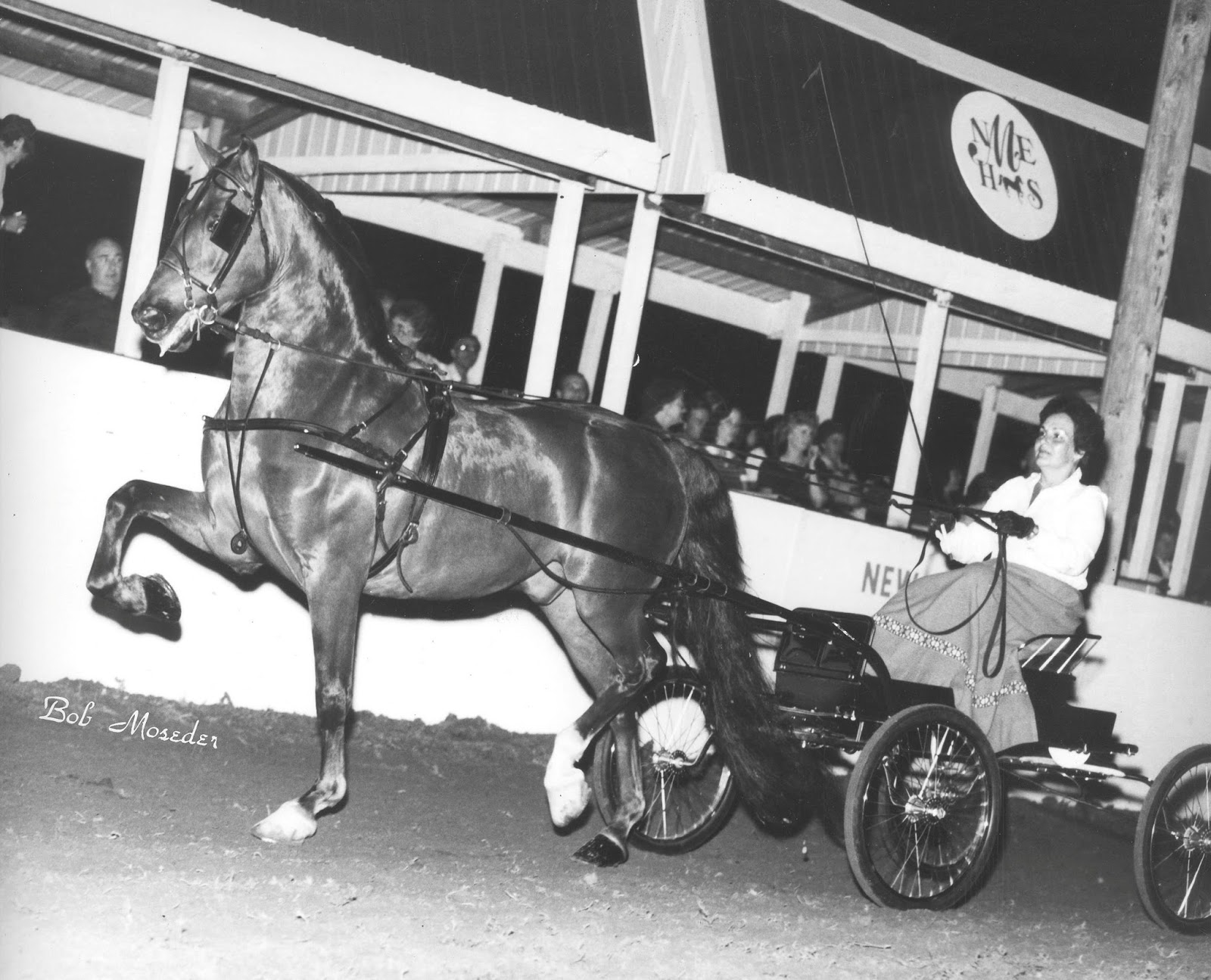
In keeping with CNN’s current series on the seventies, the star of my seventies was a Morgan gelding called Kanes’ Classic.
We had just sold a young, home-bred mare that I was showing for a lot of money and went looking another show horse. My husband, Bob, and I were at a Morgan show several states away from our farm in Connecticut. We sat in the stands during the park classes (I wanted a high-stepping park horse) and looked for something we thought was special.
We knew that most likely the horse we wanted would not be openly for sale, but we didn’t think that purchasing that special horse would be impossible because, after all, we hadn’t planned on selling our special mare.
The first horse we took a shine to was a golden maned and tailed gelding. Bob followed the horse and his rider back to their stalls and made an offer. It was politely refused. It’s interesting to note that this horse went on to win multiple championships at the top shows. So I guess we at least had good taste.
The next horse that caught our fancy was Kane’s Classic. Bob made an offer to the owner and it was accepted. We had a new horse! And to sweeten the deal, we were able to take “Classy” back to our stalls and show him the remainder of the show.
![]() |
Kane's Classic winning Ladies Park Harness |
Happily we went back to the motel that night, looking forward to getting to know our new horse.
When we got to the barn early the next morning, his stall was empty! Bob stormed over to Classy’s former owner, demanding he bring the horse back to us. Money had changed hands and a contract had been signed.
“My wife,” the man explained, “said she would divorce me if I sold Classy.”
Arms folded tightly across his chest, Bob fumed. He turned on his heels and began to walk away before he physically hurt the man.
“But,” the man said to my husband’s retreating back, “I can probably talk her into letting Classy go for another $500.”
My husband wanted no part of such unscrupulous dealings. However I was already picturing many blue ribbons with Classy. I reasoned with him that we were prepared to pay more anyway, so we could afford the extra $500. It took a lot of convincing, but to his credit, my husband swallowed his pride and forked over the additional $500.
As we walked away with Classy, the man said that he’d return the $500 once his wife calmed down. Never heard from him. That was forty years ago!
Classy was worth every penny. We won countless ladies park harness classes and he soon earned the reputation of the horse to beat.
Isn't showing fun?! |
Come back next month and I’ll tell you all about the scariest adventure Classy and I had.
Sunday, June 7, 2015
Picking a Winner
Everyone loves a winner. Fresh on the heels of American Pharoah's win at the Belmont Stakes and capture of the Triple Crown--an honor which has eluded horses for over three decades--that love is stronger than ever. American Pharoah's name will be captured in the record books, his story will live on, and his image will be instantly recognizable. But amidst the hoopla over what is undoubtedly a great sports history story, I still wonder about the horses whose stories will fade into the mists of history. I wonder about horses like Frosted or Sham, who might have been the winning favorites if they had just not been born in the same year as a super horse. I also wonder about the ones which almost made it--Big Brown, Funny Cide, and Silver Charm-- the ones which carried the hopes and dreams of a fickle public, only to lose in the last leg, their names generally forgotten, and have faded into the hazy public memory by all except true racing fans. But they all had their stories to tell, winners, near winners, and ones who trailed the pack. Stories about the horses, the trainers, the owners, the grooms and everyone who helped give them a shot at the Triple Crown all have their tale to tell. But these are not the stories the public wants to hear--or what the media thinks the public wants to hear--if they are not the winners.
I can't help but equate this same message to the stories told in books. According to a recent post by fantasy author Ursula K LeGuin in The Guardian, http://www.theguardian.com/books/2015/jun/03/ursula-k-le-guin-amazon-bs-machine?CMP=share_btn_tw
she accuses Amazon's marketing approach of sell it fast, cheap, and move on of having changed the landscape of both readers and publishers. Books are offered and promoted only if they are a safe bet commercially, then those books are heavily marketed until their sales wane, and it's on to the next one. Readers are left with fewer choices. This also leaves little hope for the books with slow but steady appeal (and sales) or for ones that don't conform to the model of commercial success. I'm not sure how the Indy author can or will affect this trend, but I would hate to think that good stories don't ever get a spot in the starting gate just because they don't have the look and feel of a commercial break out novel. Like the horses which aren't the fastest, they all still have a story to tell.
Photo credit: "The horse, the legend" at www.photopin.com; Creative commons licenses.
I can't help but equate this same message to the stories told in books. According to a recent post by fantasy author Ursula K LeGuin in The Guardian, http://www.theguardian.com/books/2015/jun/03/ursula-k-le-guin-amazon-bs-machine?CMP=share_btn_tw
she accuses Amazon's marketing approach of sell it fast, cheap, and move on of having changed the landscape of both readers and publishers. Books are offered and promoted only if they are a safe bet commercially, then those books are heavily marketed until their sales wane, and it's on to the next one. Readers are left with fewer choices. This also leaves little hope for the books with slow but steady appeal (and sales) or for ones that don't conform to the model of commercial success. I'm not sure how the Indy author can or will affect this trend, but I would hate to think that good stories don't ever get a spot in the starting gate just because they don't have the look and feel of a commercial break out novel. Like the horses which aren't the fastest, they all still have a story to tell.
Photo credit: "The horse, the legend" at www.photopin.com; Creative commons licenses.
photo credit: <a href="http://www.flickr.com/photos/74031909@N00/1120222622">The
horse, The legend</a> via <a
href="http://photopin.com">photopin</a> <a
href="https://creativecommons.org/licenses/by/2.0/">(license)</a>
Labels:
American Pharaoh,
author,
Belmont Stakes,
Big Brown,
break out novel,
fantasy,
Frosted,
Funny Cide,
horses,
novel,
Sham,
Silver Charm,
sports history,
starting gate,
Triple Crown,
Ursula K LeGuin,
winners
Subscribe to:
Posts (Atom)