Showing posts with label writing. Show all posts

Monday, October 31, 2016

Scheduling Writing Time and Embracing Ideas


It is an interesting balance, finding the time and motivation to write horse stories.  The topic of horses is one I am ever passionate about.  Having the motivation to write a particular story however can be difficult at times!

I schedule time each week to work on one novel or other.  Recently I have finished and published B and B  and I still aim to bring out the sixth novel in the Free Rein series before year’s end.  That said, book 6 is being difficult!  I have half of the novel written and am struggling to continue with it.

Do you Schedule Writing Time?
In spite of this, I set myself a goal to write a chapter each week, knowing that sometimes I just need to sit and write.  When I do this, the ideas come and I get caught up in the story once again.  Writing takes real commitment at times.

Alongside working on this story, I started to toss around the idea of a series for young adults.  As I mulled it over for a week or two, I sat down to write one day and found the characters developing before my eyes.  In fact, in a 3 day period, I had written half of the first two novels in the series!

There are times when motivation strikes you and you just need to write.  Take advantage of the times when the words flow quicker than you can write – or type! – them.  Alongside this, be diligent in setting aside time to write each week so that your stories are progressing.  As a writer, it is important that you consistently invest time in your art, even when you don’t find motivation knocking on your door.  Find a balance between making use of ideas when they come to you and writing because you know your story needs to be written.

If you’re a writer, what story have you most struggled to complete?  How did you get around this?

Wednesday, August 24, 2016

The Farm Detective


The everyday running of a horse farm is both exciting and challenging. From the lawn tractor that won’t start (yet again) to the mare who is mysteriously losing hair on her face, to the odd looking weed that has suddenly sprouted in the center of the pasture, there is always at least one ongoing mystery on the farm.

From creative thought to research to problem-solving, writing is much like farm management. First, a problem, conflict, or potential threat has to be identified. On the farm it might be swarming bees, a lame horse, or a leaky barn roof. In writing, it could be a murder, a romantic triangle, or even the loss of a job.

The research phase involves the writer understanding the problem enough to explain it to readers, and offering a plausible resolution. It also involves the characters taking steps to manage the problem, or methodically gather information toward resolving the conflict. In the barn, research might take the form of different sprays to get rid of the bees, an internet search or a call to a local county extension agent to identify the unusual weed, or palpation of a horse’s leg to identify the source of the lameness.

Finally, the character or the horse owner has enough information to make a decision that will solve the problem. The decision might involve some trial and error, but eventually a resolution is found. The weed turns out to belong to an innocuous branch of the mint family, the lameness stems from a sore hip, and the bees, well, spraying a mixture of vinegar and water around the barn seems to deter them.

Unlike mystery books, however, farm-based mysteries usually do not involve a murder. But the thinking process that goes into each really is very similar, and I have found that creative problem-solving on the farm also allows me to then create some interesting plot lines. 


One recent challenge was how to secure the barrels for our new horse obstacle so they did not tip over. After much research about safety, and a few trial and error attempts, we ended up packing tires around the barrels to create a stable obstacle for our Colby's Army horses and riders to navigate.

Farm challenges can be frustrating, but if you begin to think of them as a way to develop a book idea or a story line, maybe some of the frustration will turn into creativity. This week I have dealt with the non-starting mower, a mare’s facial hair loss, unwanted bees, a leaning barn support beam, an electric fence that does not want to turn off, and a few other odds and ends. What have your farm or writing challenges been recently?

––

Lisa Wysocky is a bestselling and award-winning author of fiction and nonfiction, including the Cat Enright equestrian mystery series, now optioned for film and television. She is also a therapeutic riding instructor who consults with PATH and other centers about their horse herds. Find her at lisawysocky.com

Wednesday, July 27, 2016

What I Wish I'd Known When I was Eleven


When I was young, all I could think about was horses. From the time I stole a tiny, plastic horse from the farm set at my nursery school (I was two), horses were my thing. After years of raking yards and many summers of lemonade stands I finally saved up enough to buy a pony when I was eleven. From there I moved up to an Appaloosa mare and began to compete. Since then I have trained, instructed, and shown successfully on a national level, although I sometimes feel my journey with horses is just beginning.

I have learned a few things over the years, however, so I thought this might be a good time to share what I wish I’d known when I was eleven. And, in reviewing this list, I found that it applies to books and writing, just as much as it does to a journey with horses.

1. It’s okay to ask questions. In fact, never miss an opportunity to ask. It is the very best way to learn something that is important to you. Ask more than one person, then compare answers to develop your own opinion.

2. Set a goal, one that is doable. Your goal should not be winning a class or writing a best seller, but more along the lines of improving your performance. You might not reach your goal, but you will have learned something along the way. When you do reach a goal, celebrate!

3. Prepare, then prepare some more. Think of every possible scenario regarding your goal and walk yourself through all of them, as best you can. Then do it again, and again.

4. As much as you can, read. Then read again, and discuss the ooks with others. There is always something to learn.

5. Watch your horse and the people around you as he or she interacts with others. That is probably how the horse or human will try to interact with you. Then adjust your demeanor accordingly. Some horses and people respond best to a soft voice, others need firm, business-like directives. Make sure your horse and your friends are a good match for you.

6. Always wear a helmet when you ride. Always. I have seen far too many accidents, many at the walk and trot, to feel it is safe for anyone to ride without one. (Okay, not much in common with books here, but it is important.)

7. Follow  basic safety guidelines in all that you do. Most injuries happen out of carelessness. Keep your lead rope from dragging on the ground, check your girth or cinch often, make sure your equipment is in good condition. Constantly think the equine mantra: is this safe?

8. Have fun, and try new things, such as a Dressage or barrel racing lesson, or reading a SciFi  novel or a biography. It is important to expand your horizons in all that you do.

9. Make friends and encourage others. Then, your new friends will encourage you, too. Remember that you do not compete against others, but against your own best self.

10. It’s okay have a bad day. If you’re smart you will learn something important, so smile and take time to digest what went wrong so you can come back better and stronger the next day.

Just like you, I have learned so much more during my journey with horses and books than just this. But I really, really wish I’d known all of these things when I was eleven. 

––

Lisa Wysocky is a bestselling and award-winning author of fiction and nonfiction, including the Cat Enright equestrian mystery series, now optioned for film and television. She is also a therapeutic riding instructor who consults with PATH and other centers about their horse herds. Find her at lisawysocky.com

Sunday, July 3, 2016

Trimming the Deadwood and Other Painful Experiences

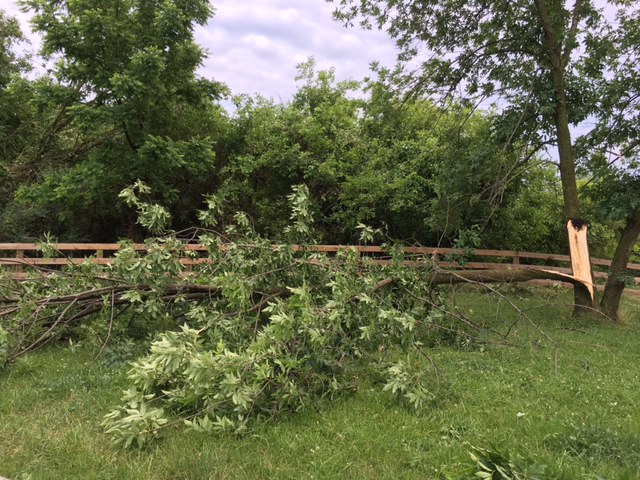
Last week a tornado hit our small town, which was quite a shock for this area of the Mid Atlantic. As roads again became passable, telephone poles replaced, electricity restored, neighbors gathered at grocery stores, churches, schools and work comparing the damage and sharing their experiences. Everyone pretty much agreed that they felt lucky it wasn't worse than it was. The damage to our farm consists of broken trees, some hanging precariously over fence lines. The man hired to remove the deadwood gave me the unfortunate news that many of my trees could not be saved. When a tree sustains so much damage and the interior is exposed, it is open to disease, infestation, and rot. My beautiful shade tree in a small paddock has to be completely removed, lest on some future date it dies and falls on the fence. This hard news made me think of writing, of course! How often do we look at our work in progress and procrastinate over making the necessary cuts...cuts that will be for the good of the whole story. The first draft of my last book, False Gods, eventually got a deadwood trimming of nearly 30,000 in order to tighten the plot, keep the pace moving, and eliminate fluff. Oh, but how we fall in love with our own fluff! At first, I snipped a few leaves and branches here and there. Then a few bare limbs. Eventually, I saw that whole chapters had to go. Clear the deadwood. Make way for new growth. Rev up that chainsaw and do what's necessary, no matter how hard it is to say good-bye to that lovely shade tree.
http://amzn.to/1TVvENR

Wednesday, June 29, 2016

Excellence in Editing and Formatting


I confess that I have a number of pet peeves when it comes to the editing and formatting of books. As someone who edits for several small presses as well as independent authors, I understand the positive impact the good brain and eye of an experienced editor can have on the finished product. Wearing an author hat, we all read or see what we expect to see on the page, rather than what is actually there. If we expect to see, "The horse ran across the road," what might really be there is "The horse tan across the roas." We don't see what is obvious to another, because our author brain knows what is supposed to be there.

A recent labor of love.
 As an editor, I want to see . . . rather than the annoying ............... I like to see long dashes––rather than - this. A lack of consistent spelling of names and products drives me nuts, as do spaces between paragraphs. The Chicago Manual of Style is my writing and editorial bible. I also do book the occasional book design, so paragraphs that have indents of more than a third of an inch bother me, as does ragged left text in a printed book.  

The proliferation of self-published authors who do not have the funds or take the time to hire an independent editor to catch these and other mistakes adds to the problem. When I as a reader am distracted enough by poor formatting, typos, and plot inconsistencies. I put down the book. And that's a shame, because most times, the story is worth reading. Lest you think I am too hard on authors, I include myself as one who has made the mistake of self-publishing a book that was not independently edited, a book that was not ready for publication. Lesson learned. 

The fact remains that an author who publishes with a small independent press, or who self-publishes, has to deliver a product that is equally as well-edited and well-formatted as a book that has landed on a major bestseller list. That is hard to do, but the extra effort will be worth it. I also believe that this attention to detail in writing and producing books carries through to other areas of our lives. It translates to a spotless tack room, diligence in developing a good canter departure, and delivering a well-turned out horse. It's taking time to do the best you can and in taking pride in going the extra mile to make your product that much better.

Even with as many as seven edits, each of my books that were published by a major publisher has a typo or two. Those are seemingly inevitable. But I use well-edited books, expert grooming of horses, and beautiful riders to motivate myself to reach deeper, father, and higher in all that I do. What motivates you to do better?

-

Lisa Wysocky is a bestselling and award-winning author of fiction and nonfiction, including the Cat Enright equestrian mystery series, now optioned for film and television. She is also a therapeutic riding instructor who consults with PATH and other centers about their horse herds. Find her at lisawysocky.com

Wednesday, June 1, 2016

Summertime


Summer seems to be here in full swing in the South. It was as if the weather went last week from a nice, cool, wet Spring to muggy, miserable, energy-draining, 90-degree humidity in the blink of an eye. As a Minnesota native, I struggled in the heat for many years until I finally figured out a while back that it was okay to slow down on hot summer afternoons. Rather than ride in the afternoon, I could write. Rather than muck stalls at noon, I could do that in the evening.  I’ll even admit to the occasional summer afternoon nap.

Acknowledging and respecting the heat should be obvious to many, especially people who grew up in warmer climates, but to a hard-working upper mid-westerner, that lesson only came after years of letting the heat beat me up day after day. Of course, when I finally decided to work with the heat, rather than against it, a horse was involved.


I have long been an advocate of humans studying the horse to learn about him- or herself. It’s what I teach in my clinics and it is a theme that runs through many of my books. Horses study people all the time. It is part of their safety system, and over time, horses have developed an innate ability to tell if a human is mad, sad, tired, sick, angry, or joyful––all from a hundred or more feet away. Why, then, could I not understand that if my horse was hot, then I might be, too?

Then one hot Tennessee day a draft mare that I was caring for became overheated while standing in her paddock under the shade of a lovely, old tree, and something inside me clicked. Just maybe, it was too hot for me, too. I brought the mare in, hosed her off and dried her, then put her in a stall under a fan. Then I did the first smart thing I’d done in a while and went inside.

Many people love the heat. Not me, but I have learned to use it to my advantage. I write all year long, but I am far more productive in the summer, when high temperatures force me inside. The afternoon heat removes all temptation for me to perform yard work, mow the pasture, clean stalls, ride, fix the fence, haul hay, and all the other outdoor activities people with horses regularly do.

Instead, I get to write. I get to put down words that help someone forge a better relationship with his or her horse, and words that hopefully engage people as they help Cat Enright, my protagonist, solve a horse-based who-dun-it.

Summer heat? It will never be my favorite thing, but I’ve learned to make it work for me. How about you? Heat or cold. Which do you prefer?

––

Lisa Wysocky is an award-winning, bestselling author and clinician. She is also a registered PATH instructor. Find her online at LisaWysocky.com, or on Facebook or Twitter.

Wednesday, May 4, 2016

Reading, Writing, and Resting


I just came off of a seven-week run on the road, seven weeks of horse fairs and expos, clinics and book signings. I met people everywhere from Montgomery, Alabama to Fargo, North Dakota, and it seems like most of the 62,000 people who attended the Midwest Horse Fair in Madison, Wisconsin. Whew!

Of course I came home with pneumonia, first in the right lung, and several weeks later in the left. That will teach me to do too much. :-) Between bouts of pneumonia, I was able to take part in a really fun video for Colby’s Army, a nonprofit that provides therapeutic riding and other equine assisted activities and therapies in Ashland City, Tennessee. I hope you’ll take time to watch the video, as it was a ton of fun to make.

With strict instructions from my doctor to rest, I have been planning the fourth book in the Cat Enright equestrian mystery series. Her voice is becoming more insistent in my head as I think of possibilities. All I can say at this point is that it will involve a racetrack, and that a number of Cat’s relationships will evolve to new levels. We are looking at a Fall 2017 pub date, so Cat and I need to get writing! After six awards and a film/tv option, the pressure is definitely on to deliver an amazing story. I have no doubt that Cat will come through with flying colors.


I’m off to another nap. Read and ride well. Until next month.

Lisa


––Lisa Wysocky is an award-winning author and clinician who teaches people about the horse. Find her online at lisawysocky.com

Wednesday, April 6, 2016

Fiction Versus Nonfiction


I recently finished reading two books. One was a nonfiction book about horses, and I came away with the thought of “Really? What kind of tale is this author spinning?” The fiction title was a mystery and the protagonist was a Realtor. From what little I know about buying and selling real estate, that part of the fiction book was completely based in fact.

It is obvious that the line between fiction and nonfiction can be, and often is, blurred. But as an author who writes both, I sometimes wonder just where that line is. Every author has a unique writing process, but certainly a nonfiction book needs to be steeped in fact. Even if the author knows the subject like the back of her hand, research should be done to confirm lesser known facts. For the reader’s benefit, the ideas need to be presented logically, with a little entertainment, such as a good story that is relevant to the facts, thrown in for good measure.

While the writing process for nonfiction can be methodical, with the author checking off each of the points he or she wants to make, fiction can be a wilder ride. From the invention of characters, scenarios, sometimes even the invention of entire towns, the process can be challenging, but a lot of fun. The inventions, however, need to have enough fact in them that the reader is not taken out of the story in disbelief.

In these ways, nonfiction can have an element of fiction, if the author is telling a story to illustrate a point, and fiction must have enough fact to make the story believable. That can be a thin line that is hard to follow, and I applaud every author who gets it right.

I have written many books, and looking back, I have done better weaving all of this together with some books than with others. I am thrilled to report, however, that I seem to have gotten it right in my newest equestrian mystery, The Fame Equation, which has been selected as one of three finalists in the mystery category for the IBPA Benjamin Franklin Book Awards. 

In a few days I will head to Salt Lake City in a day or so to see if this book, the third in the series, has been selected for a gold medal, or a silver one. In either case, I am so honored by this recognition. This is the sixth award for the series, which has also been optioned for film and television. After so many, many long months of mixing horse facts with the lives of my fictional characters, it is a wonderful feeling to know that in the end, the balance was right.

In a final note, I will be at the Midwest Horse Fair in Madison, Wisconsin April 15-17 teaching people about ground driving and riding in balance. Hope to see many of you there!

––

Lisa Wysocky is an award-winning and bestselling author and horsewoman who educates people about the horse. She also is a registered PATH instructor who consults with therapeutic riding centers across the country about their hoses and horse herds. Find her online at LisaWysocky.com


Wednesday, March 9, 2016

Moving


Moving. Does anyone actually look forward to it? I have spent the last month moving a therapeutic riding center forty miles. It seemed, at times, like 400 miles. Volunteers and I packed up girths, saddles, hay, horses, poles, barrels, storage sheds, water troughs, desks, filing cabinets, tires, grain, supplements, bits, polo wraps, longe lines, and much more. Then we had to unpack, inventory, put up fencing, and organize it all. Whew.


We are still a long way from being finished, but we are functional. Well, almost. We need a mounting block and a wheelbarrow, an electrician and a few more volunteers. I have no doubt that they will all eventually arrive. The best part is that we are now in a large, 54-acre facility with three creeks, a waterfall, riding and hiking trails––even a stage and dance floor.


While the move was exhausting, I also found the new location caused my creative juices to stir. As a mystery author, I always look for fun ways to involve horses, interesting people, and unique settings into my stories. This location has all that and more. I began to have so many story ideas, that I started to jot them down into the notes section of my phone. Now I am intrigued to find out which of these ideas will turn into a book or a short story. Pieces of other ideas, I am sure, will wend their way into a chapter or two, as well. 


Oddly enough, the farm is just a stone's throw away from where Cat Enright, the protagonist in my equestrian mysteries lives. When I started the series a number of years ago, I never dreamed I'd be involved with a therapeutic riding center that was so close to her fictional home.

As a writer, sometimes all it takes is a change of scenery to kick start a project, or get a book to the finish line. As you can see, I now have scenery galore! Feel free to follow the progress of the new farm on Facebook. I think we have a lifetime of projects, and ideas, waiting.


If you are ever in Ashland City, Tennessee, stop by Colby's Army for a visit.  I will probably be in a shady spot near the creek, writing.


Lisa Wysocky is an award-winning author, clinician, trainer, and riding instructor.
Find her online at LisaWysocky.com.

Wednesday, February 10, 2016

Collaboration

Collaboration. We do it all the time, whether we realize it or not. A family might collaborate to get dinner on the table. Co-workers collaborate on projects, and we horse people collaborate with our horses every time we interact with each other. When it comes to writing collaborations, however, the word escalates to a new level.

I live in Nashville, Tennessee, home of Music City. In the thirty-plus years I have lived here I have come to realize that most of the songs that are heard on the radio are written by more than one person. Collaboration. Many books are also a collaborative process. In his later years, my favorite author, Dick Francis, collaborated with his son Felix, to turn out several excellent horse-based mysteries. After Dick's passing, Felix took up the reins and continued on in an almost seamless transition.

I have co-authored several books, one being Front of the Class, the true story of Brad Cohen, an inspiring teacher with Tourette syndrome. We were thrilled when Hallmark picked it up for a Hallmark Hall of Fame television movie. Each of my writing collaborations have been unique, especially my most recent one: Eight Mystery Writers You Should Be Reading Now.


This project features eight writers within the genre of mystery. Some, like me, write fun cozy mysteries, while others write hard-boiled thrillers. The book introduces each writer with a bio, chapter from one of his or her books, a short story, and an interview. I am so proud to be grouped with such incredible authors as Lisa Alber, Jessie Bishop, Kathleen Cosgrove, Michael Guillebeau, Chris Knopf, Larissa Reinhart, and Jaden Terrell. Plus, our foreword was written by none other than bestselling author Hank Phillippi Ryan.

While we each wrote or provided our own content, the decisions about cover, sales, marketing, and many other things have been a true collaboration. What happens when you throw eight people who don't know each other well, if at all, together to make such decisions? Cooperation, encouragement, excellent ideas, and joy. This unusual grouping of people could easily have turned antagonistic and ego-driven, but that is the definitely not the case.

As authors, we all need to promote our own books, but what a refreshing thrill it has been to also plug other authors and books that I love. If you are searching for new reads, I hope you will consider these authors and their books. Even though most of the stories are non-horsey, they are good. Very good. It also includes a new short adventure from my own protagonist, horse trainer Cat Enright, as she searches for Bubba, a run-away child. Of course Sally Blue, the (possibly) psychic mare chimes in with clues. I hope you enjoy it, as well as all of the stories and chapter samples in the book.

The book is available as a kindle download on Amazon.com, but will be FREE on Feb. 20-21. Happy reading!
___

Lisa Wysocky is an author, speaker, and clinician who teaches people about the horse. She is a registered PATH instructor who also consults with therapeutic riding programs about their horse herds. Find her at LisaWysocky.com

Wednesday, January 13, 2016

Updates and Revisions

My literary agent recently arranged for me to get the rights to several of my earliest works back, a “work” being a book. This sometimes happens when a publisher closes their doors or changes focus on the kinds of books they want to publish. When a writer sells book rights to a publisher, the publisher then has the “right” to publish the book for a specific time period in ways, shapes, and forms that are detailed in the publishing agreement, but that are also usually left up to the publisher.

This means an author usually has little to no say about what the cover looks like, or the size of the type, or whether or not it ever becomes an audio book. The tradeoff is typically excellent editing; the support of sales, PR, and marketing teams; and often, a hefty advance in anticipation of solid book sales.

One of the books I got back, Success Within, is eleven years old and used to be one of my most requested books at my horse clinics and at horse fairs and expos. Used to be, until I couldn’t get copies after the publisher sold out to a company that had no interest in this particular title. Long story short, I am in the middle of the last of the revisions of the book for an updated second edition, and it should be out in March. If you are interested, my website will have news of the actual publication date.

In doing the revisions, I was both thrilled and horrified to find how much I had grown as a writer these past eleven years. Granted, I had never been happy with the final edit of the initial book, but far beyond that, I really hope this second edition will be much better written, and far more engaging. I found some of the passages in the first edition simplistic and more than a few thoughts poorly explained. Horror rushes through me when I think of people reading this early work, but that feeling is mixed with huge pride that the book touched a great many lives.

As writers, we all constantly work to improve our craft. We, hopefully, learn to streamline words when needed, develop beautiful passages of prose and place them in the right places, and both cut to the heart of the matter and communicate our point in ways that leave the reader wanting more. That is not an easy task and writers struggle every day to make that happen. When it does, we rejoice! As time goes on, the idea is that we should improve in this and in doing this rewrite, I am very glad to see that I have.

This process of updating and revising, and the strengthening of my craft of writing, is not all that different than what most of us do with horses. We constantly learn about the horse and find new ideas that will improve communication. Periodically, we reject older methods for ones that work better for the horse, and revel in the beauty of those rare moments of perfect partnership. In that way, the craft of writing and the art of riding are not all that different. 

Lisa is the author of My Horse My Partner and Horse Country, among many other books, and the award-winning Cat Enright cozy equestrian mystery series, now optioned for film and television. When not writing, Lisa is a therapeutic riding instructor who consults with PATH and other centers about their horse herds. She splits her time between Tennessee and Minnesota.

Sunday, January 3, 2016

Banished Words

                                                                    Milton C. Toby photo
By Milton C. Toby

How often have you read or heard snippets of dialogue like this one:

"So, Mrs. Rottingham, what does this new information tell us about the missing horse?" the detective said.

What purpose, exactly, does the introductory "so" serve?

No purpose at all, apparently, which is why it topped Lake Superior State University's 41st annual "List of Words Banished from the Queen's English for Misuse, Overuse, and General Uselessness." The list first was compiled by the late W. T. Rabe, former public relations director at LSSU, who began collecting words he and his colleagues hated at a New Year's Eve party in the mid-1970s. Publication of the inaugural list generated hundreds of letters to LSSU, and the banished words selection soon was opened to suggestions from the public.

One of the nominations for banishing an introductory "so" from our speech came from Thomas H, Weiss, from Michigan:

"Frequently used to begin a sentence, particularly in response to a question, this tiresome and grammatically incorrect replacement for "Like," or "Um," is even more irksome . . . It hurts my ears every time I hear it!"

Scott Shackleton from Canada noted that "the word serves no purpose in the sentence and to me is like fingernails on a chalkboard."


Other words or phrases to make the 2016 list of banished words (with selected comments) include:
  • Conversation--We are invited to "join the conversation if we want to give an opinion. This expression is overused and annoying."
  • Problematic--A personal favorite of mine, "problematic" was described as a "corporate-academic weasel word."
  • Stakeholder--"A word that has expanded from describing someone who may actually have a stake in a situation or problem, now being overused in business to describe customer and others," according to LSSU. "Dr. Van Helsings should be the only stake holder," according to Jeff Baenen, of Minneapolis, Michigan.
  • Price Point--"An example of using two words when one will do."
  • Secret Sauce--I've never encountered this one, but it apparently is common in business communications touting the success of something or other.
  • Break the Internet--"An annoying bit of hyperbole about the latest saucy picture or controversy that already is becoming trite."
  • Walk It Back--Used to describe a politician who makes a statement and then has to either retract it or try and explain that what he said isn't what he really meant.
  • Presser--Ridiculous shorthand for a press release or press conference.
  • Manspreading--Used to explain the lack of seats on pubic transportation in larger cities as males take up more than their fair share of room.
  • Vape--A verb describing the use of e-cigarettes instead if tobacco products. Canadian David Ervin hopes the word "goes up in smoke."
  • Giving Me Life--A phrase that "refers to anything that may excite a person, or something that causes one to laugh."
  • Physicality--Common in sports broadcasting and writing, although no one knows exactly what it means.  
So, why should the LSSU list and others like it matter for writers?

For me, the list means a New Year's resolution to be more aware of trendy words when I write. Sometimes they work, sometimes not, but there always is a danger of confusing readers with a word that was popular yesterday, but not today. There also is a very real danger associated with trying to sound hip when you are anything but, as I've learned to my chagrin from time to time.

Sunday, December 20, 2015

Horses, Books, and Sanity

by L. R. Trovillion

I'm only sane because I write and I ride. I see that now.

All last year during a particularly difficult period wherein my horses became unrideable, I swore to anyone who would listen that I had bought my last horse. Friends and family smiled, nodded, and disbelieved me. I was speaking the truth. I'd had my heart broken for the last time. I was done.

A week or so ago I accepted the invitation of a friend to ride a horse at his barn. When I arrived and was shown a very tall, red Thoroughbred ex-racer waiting in the cross ties, I asked myself "What woman of a certain age gets on an OTTB when she hasn't slung a leg over a horse in more than a year?" Well, I'll tell you. A woman who has lost a sense of self preservation or one who is sad over having lost a part of herself. After a short ride (the limit for my out-of-shape muscles) I got off, but wasn't ready to leave. The identity of being a Rider came back to me both barrels and ripped open that plugged up place in my heart which had convinced me that riding was a thing of the past, time to move on, close the book. No. I am a rider--maybe not a great one or even a good one, but that's who I am.

Something inside woke up and took notice. That something got plucked once again this week as I was reading Elizabeth Gilbert's work on creative living, Big Magic. In a passage about persistence I read words that leapt off the page and slapped me in the face. She was talking to me. Gilbert likens the creative mind to a border collie dog. You must give it a job--something to do--or it will find  a job you won't much like, such as tearing up the couch. I laughed, how true! But then she hit home, writing about herself: "...if I am not actively creating something, then I am probably actively destroying something (myself, a relationship, or my own peace of mind)."  I reflected on this. Think of the "creative temperament" here--the many artists and writers who self-destruct. The creative minds that don't create,  destroy. But Gilbert gives those in pursuit of the creative life hope instead of hopelessness. She goes on to explain how creating something gives us an escape. Creating lets us forget for a while our duties, failures, age, backgrounds, enemies and insecurities. Certainly other things in life can do this as well, but by completely absorbing our attention in the act of creating something, for a short and "magical spell" we temporarily relieve ourselves from the "burden" of everyday being.  (And as writers, with our stories, hopefully we can relieve others as well.)


So, back to the myth of the tortured artist. As Gilbert points out, it is not creativity that turns people crazy, but rather not expressing it that threatens one's sanity; in other words, repressing who and what you are. So despite the difficulty, the discomfort, the heartbreak and the fear, I am going to do what I must to safeguard my sanity by being both a Rider and a Writer.

Wednesday, October 21, 2015

Writing it Right, by Lisa Wysocky

As equine authors, we all want to get not only the story right, but also the horse part of it right, too. Everyone here is an experienced horse person, and has a broad base of knowledge that we incorporate into our books to share with our readers. However, it is amazing the number of little facts that creep into the story line that need to be researched, not once, but several times. We need to be thorough on our research because, if we get it wrong, at least one reader will step up to call us on it.

I think we’ve all read a book where the author gets a basic fact wrong and it takes us out of the story. That should never happen. Even in fiction, there are facts: a horse is measured in hands, a hand is four inches, there is no palomino color in the Thoroughbred breed. If we as authors get it wrong, we have done our readers a huge disservice.

I showed Appaloosa horses for many years, and the question of their point system came up in my newest Cat Enright cozy mystery, The Fame Equation. I knew how it worked. Or did I? After reviewing the current rulebook and a number of websites, I finally went to the source and called the person at the Appaloosa Horse Club who was in charge of their points system. Yes, I was right. But if I had not been, I would have alienated a lot of readers, and worse, my readers would have lost trust in me.

Quincy is a solid colored registered Appaloosa, but he looks so much like a
Thoroughbred that even his vet and farrier worked with him for
three years without realizing his actual breed.
Authors can never assume.

That is the real concern. If a reader cannot trust an author to get a basic fact correct, what about everything else the author writes? How many other mistakes, factual errors, or misconceptions are there in a given book? I write both equestrian fiction and nonfiction and am sure to find at least two credible sources for every fact I am not 1000 percent sure of. That is maybe a little over the top, but I have written a number of horse books and no reader has yet called me on a fact. I’m sure that day will someday come, and when it does, I will welcome it, for readers are truly the final authority.

• • •

Lisa Wysocky is an author, clinician, and registered PATH instructor who helps people learn about themselves through horses. Find her at LisaWysocky.com.

Wednesday, September 23, 2015

Equine Characters

Fictional horses, just like fictional people, are fun to write. In any form of fiction, the character must have purpose in the story. One might provide comic relief, another moves the story along, a third provides important background information. Of course, every author hopes the reader will not detect any of that kind of story structure, and will simply enjoy the read.

In stereotypical tradition, the protagonist must be good, but flawed. Cat Enright, the lead human character in my horse mysteries, is loyal and loves her four-legged friends, but she has no biological family to speak of and has a teeny problem with anger management. Her sidekicks, Jon, Darcy, and Agnes, provide a voice of reason, youthful sentiment, and wacky fun, not necessarily in that order. Each balances Cat in a different way.

The horses I, or any other author, writes are no different. Gigi, the young filly in my mysteries is the usual scatter-brained young mare who is full of energy, interested in everything, and finds life so much fun! Most of us have had an experience with a young horse like that. Bob is the older, steady-Eddie gelding who might be a little dull, but who never, ever makes a mistake. If he were human, he’d be an accountant. (No offense meant to accountants in general.) Then there is Petey, who likes to grab his lead rope and lead himself back to the barn. He is an adult, but one who likes to grab his fun wherever he can find it. Anyone who has been around horses for a while has known a “babysitter” like Bob and a quirky horse like Petey.

Sally Blue is the lead equine character, and is a young(er) lead mare who is so intuitive that many of the characters in my mysteries think she is psychic. So do a number of readers. Me? I’m not taking a stand either way, because I don’t know for sure. But, many lead mares have that something extra that allows them to keep their herd safe, even when that herd includes just the lead mare and her human partner. But, Sally seems to know about things before they happen. Or, maybe she is just having a good time crossing her legs and blowing all those bubbles in her water bucket.

I love the familiarity of writing cozy mysteries. I love watching my characters grow and develop from one book to the next and have especially enjoyed watching Cat develop her own little family unit of close friends. In my third mystery, The Fame Equation (November 3, 2015), Sally teaches a new horse his place and seems to become frustrated when her human friends do not understand her many odd behaviors. Petey is being taught to pull a cart, Bob finds a new friend, and Gigi is trying very hard not to grow up.
Sally Blue is on the cover of each Cat Enright mystery.
My equine characters have not yet told me what will happen in book four, but they have given me a few hints. And that is the big difference, for me, between writing fiction and nonfiction. These characters get into my brain and direct the story far more (and far better) than I do. Other authors have told me the same thing happens to them when they write fiction. But authors everywhere, myself included, hope their characters also get into the readers’ heads. We all hope readers will think about the characters, horse or human, long after the last word has been read. When that happens, author and character alike have done their jobs.

Happy reading!

Lisa Wysocky

Wednesday, August 26, 2015

A Day in the Life of an Author

The day in the life of an author is not what most might think. Of course, it varies from author to author, just as the daily routine might vary from one accountant to another. And, when you mix horses in, the daily schedule takes on a life of it’s own.

I can’t speak for other authors, but I know that I need to write in the morning, when my mind is fresh. Usually, I do a quick read through of yesterday’s work, then dive right in. If I am writing nonfiction, something such as a book on horse training, I have an outline to follow. Those of us who publish with traditional publishers have most likely sold a proposal, a detailed outline of the proposed book, to the publisher, and the author needs to follow that outline. Nonfiction is a little easier on my brain, as I write facts, hopefully in an engaging narrative.

While other authors might outline their fiction, I do not. I know it sounds strange, but writing my Cat Enright mystery series is almost like having a conversation with my characters in my head. I sometimes even have disagreements with my characters about how the story should unfold. My saving grace on that front is that I have heard other fiction authors say the same thing.

http://www.amazon.com/Fame-Equation-Enright-Equestrian-Mystery/dp/1935270370/ref=sr_1_1?ie=UTF8&qid=1440604876&sr=8-1&keywords=the+fame+equation


I usually write for several hours, or until lunchtime. Then it is time to get down to the business of being an author. My booking and literary agents usually have sent some emails for me to respond to. When that has been dealt with I perform the necessary evils of social media and updating my website. I look over any contracts for speaking, horse clinics, writing, or “rights” sales (audio, trade paperback, foreign, etcetera), and sometimes speak to my co-authors about contracts and offers. In addition to horse books I sometimes co-author or ghostwrite autobiographies with well-known people. My books are published with a number of different publishers, so I take calls or answer their emails as well. On occasion, there is an interview to do.

By mid to late afternoon I am ready to head to the barn. Sometimes I teach a riding lesson or two, other times I feed, mow, groom, fix fences, haul hay, do groundwork, or even ride. After an early dinner I read over my morning’s work and make changes, then create a to-do list for my writing for the next day.
http://www.lisawysocky.com


Of course, there are interruptions to this basic schedule. Conferences, clinics, book signings, and speaking engagements (and the travel to and from) happen regularly. A horse might become sick, or I get edits back from my editor and hunker down for several days to get through them. Sometimes I find I just need to take a morning to pick up and organize the chaos that has developed around my writing space. But somehow, books are turned in on deadline, horses get fed, and I can’t wait to get up in the morning to start it all over again.

Wednesday, July 1, 2015

Safe? Or Boring?

I recently witnessed a young woman taking a morning ride in a field. She was riding western and ponying two horses, one on each side. Also in the field were four to five other horses who were grazing. The young woman was not wearing a helmet, and was busy texting on her phone.

“Yikes!” I thought. “That is an accident waiting to happen.”

Not every scenario has to be so filled with safety hazards, but when it comes to horses, most of the people I know who have been on the injured list (myself included), were there because he or she failed to follow a basic safety principle. Stretch your arm away from your torso when longeing a horse, you might get a dislocated shoulder. Wear tennis shoes or (gasp) flip-flops in the barn, you might end up with mashed toes.

As a PATH (Professional Association of Therapeutic Horsemanship) instructor, I am all about safety. Overly so, it must seem, to my non-therapeutic riding friends. But I am proud of being safety conscious, even if some people call me boring, and claim I am no fun to ride with.


However, when it comes to writing, and specifically writing about horses, it is a different story. As writers, we often need to throw safety to the wind and get on with the amazing stories we are compelled to tell. Every reader deserves that. Readers choose to spend their precious time reading what we write, so we had better deliver.

Last week I read a highly anticipated short story. Technically, it was brilliantly written. The dialogue flowed and the plot moved forward at a good pace. But when I was done reading, I felt empty. The writer had played it too safe and the result was that the story was predictable and boring.

Not every book, article, or story has to have a grandmother riding down Main Street on a hippopotamus to grab a reader’s attention. But, the dialogue does have to shine. The plot has to be intriguing, and in nonfiction, the facts have to be presented in a narrative that sparkles.

So when it comes to safe versus boring, I choose to stay very safe around my horses. I drive my truck within the speed limit, and with alertness and caution. But, I really, really hope my writing is never boring. That determination, though, is up to the reader.


Tuesday, May 26, 2015

Horses Sneak In

by Linda Benson

When you're a certified horse nut, horses sneak into everything, don't they? When I was younger, a visitor to my house once remarked that every. single. picture. on my walls had a horse in it. Really? I hadn't noticed. That just seemed normal to me.


When I got interested in Jamberry nails (love them, great for outdoor girls like me) one of the first things I looked for was to see if they had a horse design (they do.)


If I'm looking for anything: books, fabric, furniture, clothes, I will always gravitate toward something with a horse theme.

So it's only natural that as a writer, horses tend to sneak into my stories also, even if it's not a horse story.

Case in point: In my very first Cat Tale, called The Winter Kitten, Brianna moves in with her dad in Portland, Oregon, after leaving the horse farm where she lived with her mom, who has died.

Yes, it's true. Horses are mentioned, or are part of the plot, of several of my Cat Tales (a series about Cats!)


My novel Six Degrees of Lost, a coming of age novel told from two different viewpoints, was just re-released after the original publisher closed its doors earlier this year. It's now available under my own imprint, Seven Trails Press, and it features David and Olive, teenagers from different backgrounds, both searching for their place in life. It's filled with rescue dogs and foster animals, and *cough* even a couple of horses.

In this case, the horses that sneak in are not show horses, or a girl's dream ride. No, they are skinny old rescue horses named Shakespeare and Paintball. Here is the scene where Olive (a city girl, staying temporarily with her aunt) attempts to ride one of them. In Olive's own words:

" I feel like a total idiot, sitting up here on Paintball holding onto the saddle horn while Swede leads me around like a baby. David probably thinks I’m a complete chicken.

Paintball acts antsy, shuffling his feet, which rocks me off balance. “What’s he doing?” I ask. “Is he going to run off?”

“Olive, this horse never even flinched when we saddled him,” says Swede. “He’s so old he couldn’t spook if he tried. Nothing to worry about.”

Paintball begins to dance underneath me and turns in the direction of the barn. He raises his head and lets loose a long neigh and his whole body shakes. “Why did he do that?”

“Oh, he’s just missing the other old codger back there,” says Swede. “I’ve got a firm hold on him. He’s not going anywhere.”

“Can I just get off now?” I feel like a baby the minute I ask, but the horse is making me all jittery and nervous.

“Sure,” Swede says, bringing Paintball to a halt. “Let’s walk him back to the barn where he can see his buddy, and you can get off there.”

My insides turn over. “No, I want to get off now.”

“Okay,” says Swede. “No problem. Whoa there, old Paintball.” He takes a firm grip on the horse. “Now swing your right leg back over the cantle, kick your feet out of the stirrups, and let yourself fall to the ground easy.”

I land with a hard thump and almost fall on my butt. I look around to see if David is watching. He is. My face turns pink and I feel about three years old instead of thirteen.

From the barn behind the house, Shakespeare lets out a long plaintive neigh of his own, and Paintball whinnies back. “Whoa there, you old crowbait,” says Swede. He jerks on Paintball’s halter a few times as he walks him back toward the barn. “Behave now.”

“Maybe it’s a good thing you got off when you did,” David says.

“I don’t really know how to ride,” I mumble. I barely know David, and I feel like I just had the most embarrassing moment of my life. "

Here's the link to Six Degrees of Lost, if you'd like to know more: http://www.amazon.com/Six-Degrees-Lost-Linda-Benson-ebook/dp/B00XM2U2L0/

So yes, horses tend to sneak into every aspect of my life, from choices in living situations to decor to thinking, dreaming, and writing.

What about you? Tell us! Whether you are a horse lover, owner, aficionado, rider, writer, reader, or horse admirer, how do horses sneak into your life?