Monday, August 24, 2015

The Finest Knight's Horse


Last night, Tantius Farm hosted a war horse bonfire of epic proportions. Flames reached for the star speckled skies as friends, some equine enthusiasts, some not, gathered to chatter away about everything they could think of. Everything except the reason we were sitting around a fire.


Within the darkened barn, my teenage niece Lou slumped against the stall door at the end of the aisle, her sobs echoing into the empty stall.

Several towns away, my nephew Jack was telling his father all about the horse that he rode at my farm. This horse was gentle and kind - the finest knight's horse in all the land - and oh, how he loved little kids! Jack told his father how much he missed this horse. That someday he might not be sad anymore. Someday, I would help him love a new horse.

Two weeks ago, I buried Galahad. My finest knight's horse. My liver chestnut island of sanity. My example that magic does exist in this world. My leap of faith and blind intuition.

I had gone on vacation, something that I rarely do, and if my friends do convince me to leave the farm, it's never for very long. I miss my routine, the happy, insistent nickers every morning at feeding time, my Morgan mare Tia alternating between pinning her ears and perking them before I take her outside. My old man, TC, swaggering out of his run-in stall to meet me for grain, early morning sun glistening across his chestnut coat. Galahad poking his tiny nose between the bars on his stall door, patiently waiting for his fly mask and halter so his day can begin. The idea of "vacation" from that is wasted on me. But I tried. Monday afternoon, I had arrived at my destination, ready to have no responsibilities for 3 days. I texted my mother to let her know that I had arrived. She called me immediately.
Our last ride, taken the day before.

Galahad had been repeatedly rolling in the pasture. When she brought him in, he'd continued to try and lay down. She suspected gas colic, as he'd been through this before whenever a severe front came through. The day before had been close to 90, and the weatherman was predicting a drop in temperature between 10-20 degrees. She'd walked him the best she could and called the vet.

Within the hour, the vet called me to report that Galahad's cecum was twisted. She'd administered muscle relaxers and pain killers. Short of shipping him to the University of Cornell and pumping him full of fluids, possibly progressing to surgery, all we could do was wait.

At 9:30 pm, my cousin Sandy called with the news that his condition had taken a turn for the worse and they were now preparing to put him to sleep.

I’m not an overly emotional person. I try not to cry in front of other people if I can help it. Instead, I bottle all of my emotions and wait until I’m in a safe place to release my tears. My truck is usually my favorite safe place. But this was overwhelming. I sunk to the lawn in a tight ball and sobbed.

My valiant gelding was going to cross the rainbow bridge and I wasn’t there to stroke his neck and talk him over it. I instructed Sandy to kiss the spot just above his eyes like I always did and to tell him that I loved him.
Lou & Galahad (photo credit to Jon Jenkins)

I have always told my niece that if something happened to Galahad, I would make sure she was at the farm with him to say goodbye. She was away at summer camp for the first time, unreachable.

Another failure.

My nephew was just starting to fall in love with horses, more specifically Galahad. I was going to have to explain what had happened, and know that I was responsible for his tears because I had brought Galahad into his life.

I hung up with my cousin and continued to cry for hours. 

The next morning, as the sun hit my swollen face and bloodshot eyes, I drove home to bury my amazing gelding, tears fracturing the light all the way back to the farm.

My flip flops slapped the dew laden grass as I ran to the tarp covered figure in my front pasture. Removed from the reality of it all the night before, just words through a phone line, I was shocked into the here and now as I lifted the tarp and stroked his ice cold nose. I would never again know the friendly, sweet smell of his muzzle as he nuzzled my cheek, leaving dirty smears. I would never hear him huff and snort as I led him to his pasture every morning. I would never watch the retired Amish cart horse canter so lightly across the pasture when I called for him. The sobs ripped up through my guts, through my soul, heavily seasoned with regret. My mother knelt down beside me, tears running down her face as she held me. “I’m sorry babe. I’m so sorry,” she repeated.

In the two weeks that have passed, I’ve cleaned out his stall, dumped his water bucket, and scrubbed his feeder. I can’t seem to pack his bridles away, although I have moved his name plate to the wall where we hang all the nameplates of the horses that have gone before him. I stand at his grave and can see how he’s positioned, facing the barn like he would have wanted. And yet somehow, every morning and every night, I still pause in my routine of mixing grain for the next feeding, haunted by that nagging sensation that I’m forgetting something.  I still have to remind myself to move on to the next horse stall when I should be opening his door to feed him.

My nephew Jack was crushed. He cried and explained it this way: “It’s like all of my classmates got 100 candy bars and I only got one.” He’s seven. He asked where Galahad’s body was, because he knows that his “angel part” has gone to Heaven. He seems content to know that the finest knight’s horse in the barn is still on the property. He’s writing Galahad a letter with pictures to tell him how he misses him. He insists that we dig a little hole on top of the grave and bury his letter. He says that although he loved Galahad, he knows that I will find him another horse that he can learn to love.
Jack & Galahad 
My niece Lou has recently returned from camp and has had only 2 days to process everything before the war horse bonfire. She’s a very intelligent girl, a highly rational girl. When she first arrived for the bonfire, I found her crying in the barn near his stall. It was not a time for talking. Later in the evening, she crept away, into the barn to mourn him alone. I gave her some time before following. Hugging her shoulders as she sobbed, I said, “I’m sorry, sweetheart, I’m so sorry.” As she cried she said, “It hurts! This just hurts!”

I wish I could tell her that it gets easier, but I can’t. My eyes are clearer for the most part, but I know that the tears are just waiting for the right combination of a song, a memory and a drive in the truck before they spill over my cheeks again.


The beginning of our journey - the day I brought him home!
God speed, Galahad!

Thursday, August 20, 2015

Sadness, celebration and inspiration


By Carolyn Henderson


On July 28, wandering round a charity shop after a visit to the dentist, I struck gold. There on the shelf, for 20p, was a paperback copy of The Horse From Black Loch, by Patricia Leitch.

It was the only one of this wonderful author’s books I hadn’t read, so I couldn’t believe my luck. A few days later, something else I find hard to believe happened – I discovered that on the day I bought it, Patricia Leitch died. She was 82.

I wish I could tell her how much I’ve enjoyed The Horse From Black Loch. It’s a masterful mix of ponies, adventure and the supernatural, put together in a totally believable way. I’ve always loved reading and writing about things we can’t understand (one day, I’ll tell you about the haunted French gite we stayed in) but tethering out of this world happenings to a believable, down to earth story line is incredibly difficult.


I’ve tried to do it in Beside Me and am so grateful to my lovely husband for telling me why bits of the first draft didn’t work and saying “Yes, you’ve got it” several versions later. I don’t know if Patricia Leitch shared her work before she submitted it to her publisher, though I imagine she worked with an editor when Collins published the hardback version, entitled The Black Loch,  in 1963. I’d love to know if the story was tweaked when it was issued as an Armada paperback in 1979, because they obviously changed the title to target their market.

The opening paragraphs of the Armada Pony Book cover blurb send shivers down my spine:
“Somewhere over the hills the Horse waited, its magnificent head lifted, listening...
In the great hall at Deersmalen, Uncle Vincent raised his glass in a toast. ‘To the One of the Black Loch,’ he said.”

I’ll raise my glass in a toast to Patricia Leitch, from whose books I’ve learned so much about writing and whose writing still gives me and many others so much pleasure. If you want to read more about her, see Jane Badger’s blog post here: http://booksandmud.blogspot.co.uk/2015/08/patricia-leitch-1933-2015.html


Sunday, August 16, 2015

Lessons Learned from Jack the Ripper

                                                                     Milton C. Toby photograph
 by Milton C. Toby

A few years ago, during a session with a prominent New York literary agent at a mystery writers' convention, I pitched an idea for a nonfiction book about the theft of the Thoroughbred stallion Shergar from a stud farm in Ireland. The incident drew international headlines at the time and stories still show up in the press occasionally, mostly when anniversaries of the theft roll around. The case never has been solved, at least not officially. For my money, the theft of Shergar remains Thoroughbred racing's most famous cold case, one deserving of a new look.

The agent's response was underwhelming.

"It might be an interesting magazine article," he said. "But it's not a book unless you find the horse."

That's not likely to happen. Shergar was a 5-year-old when he was stolen in 1983 and odds are that he was killed within days of the theft. In any event, the horse certainly is dead and buried now, and no one is talking. Claims that a bullet-riddled skull (turned out to be the skull of a cow) or other bits of bone dug up somewhere or other might be the long-lost remains of Shergar surface every now and then. So far, though, no luck.

I took the agent's advice, shifted my interest in Shergar to a back burner where it had been simmering for years, and moved on to an award-winning, three-book series about racing for The History Press. Working with The History Press was an excellent idea; taking the agent's advice about Shergar was not.

Now fast forward to Jack the Ripper.

I finished a lengthy book proposal in late 2014, investigating how performance enhancing drugs became embedded in racing's culture during the first half of the 20th Century, and found an agent to shop it around. So far, we haven't been able to convince publishers that the idea is not a niche book and that it has appeal beyond the typical small audience the industry expects for horse books. We'll see how that goes.

Recognizing Newmarket's centuries-old equine heritage
Copyright 2015 Milton C. Toby
Waiting for reluctant publishers to come to their senses, and with time on my hands due to some health issues, I revisited Shergar. I arranged a few interviews, enough to justify an initial fact-finding trip to Shergar's training yard in Newmarket, in London, and in County Kildare, Ireland. During our stay in London, on a rainy Monday evening, my wife and I joined about a dozen other people on a Jack the Ripper walk through Whitechapel. These walks visit several of the murder sites and are a significant cottage industry in London.

Our guide that night, Philip Hutchinson, is an author and a respected "Ripperologist" who investigates the mystery of Jack the Ripper. Although there are a batch of theories about the identity of the Ripper--some plausible, some not so much--no one knows for certain who went on a killing spree in 1888. Interest in Jack the Ripper remains high, nevertheless, and new books about the murders are published on a regular basis.

Hutchinson said that it wasn't realistic to expect a major breakthrough more than 125 years after the fact and explained that he hoped simply to uncover bits of information that might add a new dimension to the story of Jack the Ripper. Hutchinson and his fellow investigators either never received, or never paid any attention to, advice like that I received from the agent: "it's not a book" unless you solve the mystery.

Retracing the steps of Jack the Ripper on that rainy night in London brought to mind my original interest in Shergar from my days at Blood-Horse magazine and the goals for the trip and for my own investigative efforts. Absent a confession from someone directly involved in the theft, we probably never will know Shergar's fate. Despite that lack of certainty, I believe that there is a compelling story, one that has not been told, beyond the conventional wisdom that "the Irish Republic Army did it and they botched the job."

It's a story that I want to tell.

The agent's advice cost me some valuable ground when it comes to Shergar. Jack the Ripper reminded me that even the most well-intended advice sometimes should be ignored.

The dilemma for all of us, then, is how to sort out advice from an agent, a publisher, or a colleague, or suggestions about your work from a writing group. Any thoughts?


.  

Monday, August 10, 2015

Know Your Audience


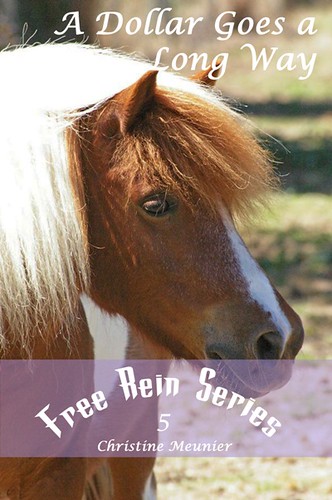
The latest book in the Free Rein Series
I have all of my books available on Kindle.  It’s great to be able to download the sales and lender reports each month and view which books have been purchased and from which country.

I am an Australian author and as such, my Free Rein series focuses on three young girls who have ponies in Victoria, Australia.  There are a lot of horse terms in Australia that readers from other countries may not be familiar with.  One such example is the word agistment.

Children’s author Deanie Humphrys-Dunne was kind enough to read and review one of the books in the series and separately she emailed me and suggested an inclusion of terms to my books.  The idea was that readers could turn to this and find the definition of such terms if they weren’t familiar with them.

This is a great recommendation that could improve my readers’ reading experience!  This is particularly so because my Kindle sales indicate that around 95% of my readers come from the United States and the United Kingdom.  I have now added an Australian Terms page to my Free Rein series website so that readers can do a bit of learning whilst finding out the latest Free Rein news.

What recommendation have you had regarding your writing that you’ve acted upon?

Saturday, August 8, 2015

Show your horse the world

Tonight I rode JJ up and down hills in the semi-dark, with a howling, biting southerly wind, and made him canter underneath big thrashing pine trees while other leaves blew across the ground at us. 


Yesterday I schooled him by the Pony Club club rooms while the local emergency services were there for a training exercise - ambulances and fire engines with their lights going, the helicopter flying in and people standing all around.


On Sunday we schooled next to a rugby tournament with plenty of yelling and whistles and hooters and speakers and crowds, and he was very patient with the small children who ran up and wanted to pat him, and the dogs that barked and lunged to the ends of their leashes at him. 


So when people say "I can't believe you ride your horse on the road" or "Wow he's so brave/bombproof", here's the thing. I have gone out of my way to train him so that he is that way! 


If there is a miniature horse convention at the measuring stand, or dog agility training, or a bicycle race with paletons of riders, or someone zorbing down the hill at the park, JJ gets to go and see it, and then gets ridden nearby so that he learns to a) see the world and b) still work despite what's going on around him. 


This is why he's brave, and why I can ride him on the road with buses and cars and motorbikes and cyclists all zooming past and he doesn't bat an eye. 

  
And don't get me started on the things I've taught him to jump over...


which is why fill doesn't bother him either in the jumping ring! 


Today we're off to our first show this season...it's just a local schooling show but I can't wait to get him back in the ring and ready to roll!


Tuesday, August 4, 2015

Finding True Stories

by Diana Kimpton

Being commissioned to write a book is an exciting event, but, once the immediate thrill has worn off, the prospect can be daunting. That’s what I found when I was asked to write Horse Stories That Really Happened. It was going to be the only horse book in a "Stories that Really Happened" series and I was required to provide 6 exciting horse stories set in a variety of time periods. To help with marketing, the publisher wanted at least one story to be set in the USA and one in Australia. 
 
As soon as I started planning the book, I realised I had a problem. Dog Stories that Really Happened would have been easy, because dogs do brave things all the time. They pull babies from burning buildings, capture criminals and discover people trapped in rubble after earthquakes. Horses, on the other hand, are timid creatures who run away from plastic bags, lions and all dangers in between. That’s why the only horses awarded the Dickens Medal for Gallantry in World War 2 got it for not running away.  

Eventually I found 5 stories that gave the variety I needed:

  • How Alexander the Great tamed his famous horse, Bucephalus.
  • An Australian heroine’s daring horseback rescue of survivors from a shipwreck
  • The wartime rescue of the white stallions of the Spanish Riding School.
  • Foinavon’s amazing victory in the Grand National when no one expected him to win.
  • The rescue of a horse from a river by a brave RSPCA inspector

At that stage, the American story was going to be the crossing of the Sierra Nevada mountains in a snow storm during the first run of the Pony Express. However, that was eventually replaced by a much better one that I came across by chance.
 
As part of my research, I’d joined a discussion group for horse lovers and early in January someone asked what presents people had had for Christmas. One answer from a lady called Angie stood out from all the others. "We got a mustang foal who collapsed in our yard on Christmas Eve" she said. . "We’ve called her Annie and are nursing her back to health.” 

I immediately wrote asking if I could put the foal’s story in the book. Her rescuer agreed and I set about piecing together Annie’s story through an email conversation that spanned the Atlantic. As it was difficult to get permission to include the various humans in the story, I decided to write the account from Annie’s point of view.  

But there was one big problem. Annie had hurt her leg and was very lame. Because mustangs are protected by law, Angie needed permission to keep her and she would only get that if the foal was free of pain. So several anxious weeks went by with my whole family biting our nails as we waited for the results of each vet’s visit. If the foal couldn’t recover, it wouldn’t just my story that would be ruined. Annie would have to be put down.  

Eventually there was a happy ending. Annie got the all clear, her adoption went ahead and so did my story. Luckily mustang supporters in her area had been watching the foal ever since her mother was killed in a car accident so Angie was able to fill in the details I needed. After she was orphaned, other mares had suckled Annie until the winter came and their milk supplies ran low. Then she’d spent a while with her older brother and some other colts, learning to fend for herself and eat the hay put out by horse-lovers.

But when she injured her leg, she couldn’t keep up with the other horses any more. All alone and growing progressively weaker, she was totally reliant on the donated hay. Then on Christmas Eve, she plucked up the courage to go down to Angie’s house where she knew the hay came from. That’s where she collapsed and her new life began.

The story of Annie remains my favourite from that book because I became so involved in the events. When the book went out of print and I got the rights back, I gave the copyright in Annie's Story to Angie so it could be used to help mustangs.

There are still some second hand copies of Horse Stories That Really Happened on sale if you want to read Annie's Story yourself.
 
The three historical stories  from the original book live on in Perfectly Pony: my ebook anthology of pony facts and fiction.  

Sunday, August 2, 2015

Horse Personality and Characters

A non-horsey friend remarked to me recently that she was amazed to learn that horses have individual personalities. It had never occurred to her. We who spend our lives with horses would respond, "Of course they do! What did you think?"  Indeed, we who know and love horses have no doubt run across certain ones who suffer from, shall we say, an excess of personality! (Dear Red Mare of mine, I'm thinking of you.)

No two horses I've owned have ever been alike.  Sure, they all had their individual strengths and weakness as far as training and talent, but more than that, they each had their own quirks, favorite treats, fears, and games they'd play with me or each other. I had one little grade horse who loved those horrible, chalky valentines candy hearts so much he would come running across a ten-acre field when he heard the box shake. Another, a huge ex-racer (pictured above), would roll on one side and instead of rising to his feet or flipping to the other side, usually sat up on his butt and walked his front feet across in order to collapse on his other side. The first time I witnessed him doing this, I ran into the field, certain that he had broken his pelvis or something.

I'm sure every horse lover reading this is conjuring up some kooky or endearing habit of a favorite horse. So now I have to ask, why are horses in books devoid of individual personality? Yes, they are often bold and generous and courageous or forgiving, but how about less lofty, abstract traits in favor of more concrete ones? Full confession, I feel now that I was remiss in not giving my horse characters in my novel more unique personalities. So, what do you say out there readers? Can you give me some experiences you've had with quirky, crazy, funny horse traits or have you known a real horse character who is crying out to be in a novel of his own?  Would love to hear from you!