Showing posts with label fiction. Show all posts

Monday, April 18, 2016

Seeking Reviews for (New) Releases


by Christine.

It’s exciting to release a new novel – all of your invested time, hard work and research has come together!

It can be disappointing to release your book and find that nothing is then happening; people may be reading, but you aren’t seeing any feedback in the form of reviews.  Seeking reviews for your novel can be a great way to increase anticipation of a story, to give you feedback and to gain new readers.
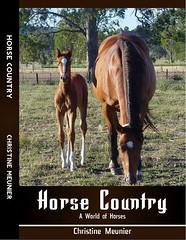
My Debut Novel, Horse Country
If you have the patience and organisation to be able to send out review copies prior to your book’s release date, you can be rewarded with reviews on the date, or even before the book is available for sale.  This can be a great way to build interest and boost sales.

Alternatively, you can set a competition (on your website, Goodreads or Facebook page) and provide free copies to a limited number of readers on release date on the condition that they provide an honest review.

If approaching people about reviews, consider:
-         Have they reviewed other books in a similar genre?
-         Are they likely to enjoy your story?
-         Do they ‘consume’ books, resulting in a quick review after you’ve provided the story to read?
-         Will they post on mediums you require, e.g. Goodreads, Amazon, LibraryThing, a personal website?

Many readers love to receive a book prior to it’s release date and will work hard to have it read and reviewed for you as an author, in time for your much anticipated release.  Consider the value that seeking out reviews can provide for your latest release – or even an older release that needs a boost!

What book have you had the privilege of reading prior to release day?  Interested in reading Christine's next adult horse fiction due for release in 2016? Leave a message!

Wednesday, April 6, 2016

Fiction Versus Nonfiction


I recently finished reading two books. One was a nonfiction book about horses, and I came away with the thought of “Really? What kind of tale is this author spinning?” The fiction title was a mystery and the protagonist was a Realtor. From what little I know about buying and selling real estate, that part of the fiction book was completely based in fact.

It is obvious that the line between fiction and nonfiction can be, and often is, blurred. But as an author who writes both, I sometimes wonder just where that line is. Every author has a unique writing process, but certainly a nonfiction book needs to be steeped in fact. Even if the author knows the subject like the back of her hand, research should be done to confirm lesser known facts. For the reader’s benefit, the ideas need to be presented logically, with a little entertainment, such as a good story that is relevant to the facts, thrown in for good measure.

While the writing process for nonfiction can be methodical, with the author checking off each of the points he or she wants to make, fiction can be a wilder ride. From the invention of characters, scenarios, sometimes even the invention of entire towns, the process can be challenging, but a lot of fun. The inventions, however, need to have enough fact in them that the reader is not taken out of the story in disbelief.

In these ways, nonfiction can have an element of fiction, if the author is telling a story to illustrate a point, and fiction must have enough fact to make the story believable. That can be a thin line that is hard to follow, and I applaud every author who gets it right.

I have written many books, and looking back, I have done better weaving all of this together with some books than with others. I am thrilled to report, however, that I seem to have gotten it right in my newest equestrian mystery, The Fame Equation, which has been selected as one of three finalists in the mystery category for the IBPA Benjamin Franklin Book Awards. 

In a few days I will head to Salt Lake City in a day or so to see if this book, the third in the series, has been selected for a gold medal, or a silver one. In either case, I am so honored by this recognition. This is the sixth award for the series, which has also been optioned for film and television. After so many, many long months of mixing horse facts with the lives of my fictional characters, it is a wonderful feeling to know that in the end, the balance was right.

In a final note, I will be at the Midwest Horse Fair in Madison, Wisconsin April 15-17 teaching people about ground driving and riding in balance. Hope to see many of you there!

––

Lisa Wysocky is an award-winning and bestselling author and horsewoman who educates people about the horse. She also is a registered PATH instructor who consults with therapeutic riding centers across the country about their hoses and horse herds. Find her online at LisaWysocky.com


Wednesday, February 10, 2016

Collaboration

Collaboration. We do it all the time, whether we realize it or not. A family might collaborate to get dinner on the table. Co-workers collaborate on projects, and we horse people collaborate with our horses every time we interact with each other. When it comes to writing collaborations, however, the word escalates to a new level.

I live in Nashville, Tennessee, home of Music City. In the thirty-plus years I have lived here I have come to realize that most of the songs that are heard on the radio are written by more than one person. Collaboration. Many books are also a collaborative process. In his later years, my favorite author, Dick Francis, collaborated with his son Felix, to turn out several excellent horse-based mysteries. After Dick's passing, Felix took up the reins and continued on in an almost seamless transition.

I have co-authored several books, one being Front of the Class, the true story of Brad Cohen, an inspiring teacher with Tourette syndrome. We were thrilled when Hallmark picked it up for a Hallmark Hall of Fame television movie. Each of my writing collaborations have been unique, especially my most recent one: Eight Mystery Writers You Should Be Reading Now.


This project features eight writers within the genre of mystery. Some, like me, write fun cozy mysteries, while others write hard-boiled thrillers. The book introduces each writer with a bio, chapter from one of his or her books, a short story, and an interview. I am so proud to be grouped with such incredible authors as Lisa Alber, Jessie Bishop, Kathleen Cosgrove, Michael Guillebeau, Chris Knopf, Larissa Reinhart, and Jaden Terrell. Plus, our foreword was written by none other than bestselling author Hank Phillippi Ryan.

While we each wrote or provided our own content, the decisions about cover, sales, marketing, and many other things have been a true collaboration. What happens when you throw eight people who don't know each other well, if at all, together to make such decisions? Cooperation, encouragement, excellent ideas, and joy. This unusual grouping of people could easily have turned antagonistic and ego-driven, but that is the definitely not the case.

As authors, we all need to promote our own books, but what a refreshing thrill it has been to also plug other authors and books that I love. If you are searching for new reads, I hope you will consider these authors and their books. Even though most of the stories are non-horsey, they are good. Very good. It also includes a new short adventure from my own protagonist, horse trainer Cat Enright, as she searches for Bubba, a run-away child. Of course Sally Blue, the (possibly) psychic mare chimes in with clues. I hope you enjoy it, as well as all of the stories and chapter samples in the book.

The book is available as a kindle download on Amazon.com, but will be FREE on Feb. 20-21. Happy reading!
___

Lisa Wysocky is an author, speaker, and clinician who teaches people about the horse. She is a registered PATH instructor who also consults with therapeutic riding programs about their horse herds. Find her at LisaWysocky.com

Wednesday, January 13, 2016

Updates and Revisions

My literary agent recently arranged for me to get the rights to several of my earliest works back, a “work” being a book. This sometimes happens when a publisher closes their doors or changes focus on the kinds of books they want to publish. When a writer sells book rights to a publisher, the publisher then has the “right” to publish the book for a specific time period in ways, shapes, and forms that are detailed in the publishing agreement, but that are also usually left up to the publisher.

This means an author usually has little to no say about what the cover looks like, or the size of the type, or whether or not it ever becomes an audio book. The tradeoff is typically excellent editing; the support of sales, PR, and marketing teams; and often, a hefty advance in anticipation of solid book sales.

One of the books I got back, Success Within, is eleven years old and used to be one of my most requested books at my horse clinics and at horse fairs and expos. Used to be, until I couldn’t get copies after the publisher sold out to a company that had no interest in this particular title. Long story short, I am in the middle of the last of the revisions of the book for an updated second edition, and it should be out in March. If you are interested, my website will have news of the actual publication date.

In doing the revisions, I was both thrilled and horrified to find how much I had grown as a writer these past eleven years. Granted, I had never been happy with the final edit of the initial book, but far beyond that, I really hope this second edition will be much better written, and far more engaging. I found some of the passages in the first edition simplistic and more than a few thoughts poorly explained. Horror rushes through me when I think of people reading this early work, but that feeling is mixed with huge pride that the book touched a great many lives.

As writers, we all constantly work to improve our craft. We, hopefully, learn to streamline words when needed, develop beautiful passages of prose and place them in the right places, and both cut to the heart of the matter and communicate our point in ways that leave the reader wanting more. That is not an easy task and writers struggle every day to make that happen. When it does, we rejoice! As time goes on, the idea is that we should improve in this and in doing this rewrite, I am very glad to see that I have.

This process of updating and revising, and the strengthening of my craft of writing, is not all that different than what most of us do with horses. We constantly learn about the horse and find new ideas that will improve communication. Periodically, we reject older methods for ones that work better for the horse, and revel in the beauty of those rare moments of perfect partnership. In that way, the craft of writing and the art of riding are not all that different. 

Lisa is the author of My Horse My Partner and Horse Country, among many other books, and the award-winning Cat Enright cozy equestrian mystery series, now optioned for film and television. When not writing, Lisa is a therapeutic riding instructor who consults with PATH and other centers about their horse herds. She splits her time between Tennessee and Minnesota.

Wednesday, August 26, 2015

A Day in the Life of an Author

The day in the life of an author is not what most might think. Of course, it varies from author to author, just as the daily routine might vary from one accountant to another. And, when you mix horses in, the daily schedule takes on a life of it’s own.

I can’t speak for other authors, but I know that I need to write in the morning, when my mind is fresh. Usually, I do a quick read through of yesterday’s work, then dive right in. If I am writing nonfiction, something such as a book on horse training, I have an outline to follow. Those of us who publish with traditional publishers have most likely sold a proposal, a detailed outline of the proposed book, to the publisher, and the author needs to follow that outline. Nonfiction is a little easier on my brain, as I write facts, hopefully in an engaging narrative.

While other authors might outline their fiction, I do not. I know it sounds strange, but writing my Cat Enright mystery series is almost like having a conversation with my characters in my head. I sometimes even have disagreements with my characters about how the story should unfold. My saving grace on that front is that I have heard other fiction authors say the same thing.

http://www.amazon.com/Fame-Equation-Enright-Equestrian-Mystery/dp/1935270370/ref=sr_1_1?ie=UTF8&qid=1440604876&sr=8-1&keywords=the+fame+equation


I usually write for several hours, or until lunchtime. Then it is time to get down to the business of being an author. My booking and literary agents usually have sent some emails for me to respond to. When that has been dealt with I perform the necessary evils of social media and updating my website. I look over any contracts for speaking, horse clinics, writing, or “rights” sales (audio, trade paperback, foreign, etcetera), and sometimes speak to my co-authors about contracts and offers. In addition to horse books I sometimes co-author or ghostwrite autobiographies with well-known people. My books are published with a number of different publishers, so I take calls or answer their emails as well. On occasion, there is an interview to do.

By mid to late afternoon I am ready to head to the barn. Sometimes I teach a riding lesson or two, other times I feed, mow, groom, fix fences, haul hay, do groundwork, or even ride. After an early dinner I read over my morning’s work and make changes, then create a to-do list for my writing for the next day.
http://www.lisawysocky.com


Of course, there are interruptions to this basic schedule. Conferences, clinics, book signings, and speaking engagements (and the travel to and from) happen regularly. A horse might become sick, or I get edits back from my editor and hunker down for several days to get through them. Sometimes I find I just need to take a morning to pick up and organize the chaos that has developed around my writing space. But somehow, books are turned in on deadline, horses get fed, and I can’t wait to get up in the morning to start it all over again.

Wednesday, June 3, 2015

The Benefits of Thinking Like a Horse

by Lisa Wysocky

Predator/prey differences aside, there are many differences between horses and humans. Horses hear higher and lower sound frequencies than humans do, and they can hear sounds that generate up to half a mile away. People, however, can better isolate where those sounds are coming from.

Humans have eight to ten thousand taste buds, while horses have up to twenty-five thousand, to better differentiate safe plants from those that are toxic. A horse can smell his owner up to three hundred feet away, and if the temperature and wind are right, from much farther away than that. Other than food, humans are lucky to smell something that is thirty feet away.

As humans, we try to impose our human experiences onto horses, and that is an impossible task. From the way horses process thought, to how they see, even to how they process touch, theirs is a world apart from the human experience. We then, have to become more horse-like. We have to step up to try to understand the horse’s experience from his or her viewpoint. Horse spook at a plastic bag one hundred yards away? It helps to know that horses cannot judge distance as well as people can. When we start thinking like a horse, our reactions––such as praise, reassurance, or discipline––to their behavior then becomes more appropriate. 


 I find it is the same when I am writing. When I write, I try to think like my readers. How will an average reader interpret a scene, or a character’s line? Will my description of a round pen, for example, make sense to a person who does not know about horses, yet not be too elementary for those who do? As a reader, I would much rather have the comfort of a concise, accurate, and thorough description of an object or a process, than have the “Huh?” experience. So, that's what I try to write.

I have been very fortunate to have my nonfiction books about horses and horse training diligently edited by people who are seasoned horse people, because people who are serious about their equine friends are the ones who will be interested in those books. On the other hand, I am equally as fortunate to have a woman who knows little to nothing about horses edit my Cat Enright mystery series. Even though I try to think like my readers when I write, I sometimes forget that not everyone knows what a fetlock is, or why a character might pull up on a saddle pad so it does not lay down hard and flat across a horse’s withers.

As readers and writers, and as people in general, it probably is a good idea to consider the end user. Whether it is a conversation with a teenager, a report sent in to a supervisor, or a trail ride with your favorite horse, considering their experiences, thoughts, behaviors, and emotions, will always make your life experience easier, and more fulfilling.

Thursday, May 14, 2015

Making Words Count: Don't Be Boring!


by Toni Leland


A few years ago, I had a great Skype session with my then-13-year-old granddaughter, who is an avid reader and was a great help to me with a YA book I was trying to write.

Anyway, she asked what the next few scenes would be and I mentioned that my main character would be taking a trip to another state. She nodded, then leaned forward so I could see her expression on the Skype screen.

"Well, okay, but leave out the boring stuff."

This caught me off guard. What would a young teen find boring about a trip? So I asked her, and she didn't hesitate at all.

"You know, sitting in the plane, taking off, all that stuff. If you use the plane trip, make it exciting. Like, if the plane crashes and she's the only survivor!"

Okay, I can see that this child will not be fooled by filler. And if she isn't, then neither will the thousands of other young readers we hope to woo with our tales.

So, back to boring. In the early stages of my fiction-writing career, I attended a workshop given by a successful writer in which she outlined the parts of a novel and their importance. She focused on the "sagging middle" because that's where many authors have problems. She talked about breaking up the story into mostly equal word counts to achieve the final goal, and how to dole out the story points through the whole thing.

Could I keep my mouth shut? Nope. During the Q&A session, I mentioned that my story was finished, but I only had 65,000 words and the required count was 85,000. How could I fix it? Without missing a beat, she said, "Come up with more story." It was the right answer, but what she didn't include was HOW to do that. I had to learn that on my own.

A story arc has three "acts" made up of scenes. Each scene should tell the reader something new and move the story forward smoothly. A story outline can give the author a map to follow and, like a road trip, should include some scenery and attractions along the way. Building the story world is one way to expand word count, but add too much and you'll have readers skipping through the narrative. Extensive character description can also expand word count, but most readers prefer to visualize a character themselves rather than read about all the physical details. Hair and eye color, body structure, any quirks – those are good, but the rest is filler. Dialogue is one of the best writing techniques for carrying a story, but make every word golden. Lots of dialogue is good and provides plenty of white space on the page that gives one the feeling of reading quickly. But dialogue that tracks every reply and grunt and "Hi" and "Yeah" and "Fine, how are you?" is boring! We write stories not about real life as it boringly is, but real life as it is interesting. Conflict is the foundation of every story, so use it to the fullest. Make your characters work for their goals and desires; give them obstacles.

Know ahead of time what your genre expects for word count and include it in your initial story plan. I found a great explanation of word counts; it made life much easier for me. To figure out how to achieve your desired word count, look at each scene or plot point and ask yourself, "What else can happen to make this more interesting?" This is how you "come up with more story."

Now, about that plane crash...


Wednesday, May 6, 2015

Writing and Riding––and Free Books!

by Lisa Wysocky

Writing about horses is a lot like giving riding lessons. Both make me think through a sequence of events. Both, over time, require me to achieve progression, and both allow me some creative freedom.

If a rider has trouble keeping her heels down, I might instead ask her to point her toes to the sky. Trouble posting the trot? Try a two-point, then dropping into the saddle before bouncing up, rather than sitting and then trying to get up. If a fictional character needs a new horse, I can invent a way to put the perfect equine into the story. Or, I can find a creative way to give a horse an interesting character quirk that ties into the plot.

I am currently finishing my third equestrian mystery (The Fame Equation, fall 2015). It has been wonderful to reconnect with my characters and help them problem solve through another murder. My characters also help stretch me out of my equine comfort zone from time to time, so it has become an educational process, too.

Why would an otherwise healthy horse blow bubbles in a water bucket, or lie in an odd position? What does a circling behavior in the pasture really mean? Those and a thousand other questions have to be researched and solidified in my mind before I can distill it down to a sentence or two, and still make it interesting for the non-horsey reader.

I research everything, even things I “know,” just to be sure. For the most part I am right, but the research often broadens my scope of knowledge, or adds one new bit of information that I can then use to move the story along.

When I finish this last edit of The Fame Equation, I will once again lose that intimate connection that an author has with her characters. Fortunately, my Cat Enright mysteries are a series, and I will soon enough be able to pick up the connection with them in a new adventure.

I have been fortunate that my series has won a number of awards, and thrilled that it has been optioned for film and television (fingers crossed). But, the mechanics of writing it have made me a better riding instructor, and have made me a better horse person.

In preparation for the fall release of The Fame Equation, my publisher has agreed to send readers of this blog a digital kindle or epub file of the first two books in the series, The Opium Equation, and The Magnum Equation. There are strings however (aren’t there always?)

1. The offer is only good through May 12, 2015
2. The publisher strongly hopes the reader will write an honest review on Amazon.com, BN.com, Goodreads.com
3. The files must not be shared with anyone else

I am thrilled with this offer, and hope you will be, too. To request your files, send an email to cooltitles@comcast.net with your name and the file format that you need.

Until next time: happy reading!

Lisa


Sunday, April 26, 2015

When Characters Speak

                                                                    Milton C. Toby photo
by Milton C. Toby

Congratulations to Andy Plattner, winner of the Dr. Tony Ryan Book Award for the best book about Thoroughbred racing published in 2014. Winning an award always feels better than losing—I won with Dancer’s Image in 2011; Cañonero II was a semi-finalist this year—but the disappointment fades quickly when the winner is a friend and a talented writer. Andy teaches creative writing at the University of Tampa and his writing skills effectively shoot down the oft-repeated line lifted from George Barnard Shaw’s Man and Superman that “those who can, do; those who cannot, teach.” Andy does both, well.

He won the Flannery O’Connor Award for a collection of short stories titled Winter Money a few years ago and was a finalist for the Townsend Prize for Fiction with a second short story collection, A Marriage of Convenience. Andy's writing has appeared in The Paris Review, Fiction, Epoch, and The Sewanee Review.

Andy was a two-time finalist for the Dr. Tony Ryan Book Award before winning this year with Offerings from a Rust Belt Jockey. Originally called the Castleton Lyons-Thoroughbred Times Book Award, the literary competition was renamed in 2008 to honor the memory of Dr. Ryan, the Castleton Lyons Farm founder who died in 2007. Dr. Ryan drew upon his passions for horse racing and fine writing when he launched the award in 2006 and his family has continued the tradition.


The Ryan Award honors the best book about Thoroughbred racing published the previous year and carries a first prize of $10,000, a princely sum that places the Ryan Award on equal footing with the National Book Award and the Pulitzer Prize.

Andy picked up his check and a custom Waterford crystal trophy during a reception held at Castleton Lyons Farm near Lexington in mid-April. His comments about the award and his writing process should resonate with writers everywhere.

It’s wonderful to be recognized for doing work that you enjoy doing, he said. Writers all know that sentiment is true, whether the recognition is a national award or a kind word from an appreciative reader. The writing process was relatively straightforward, he added. Paraphrasing here, Andy said that you get out of bed, make some coffee, pull up a chair in front of the computer, and ask the characters what’s going to happen today. Writing is not that simple, of course. If it were, just about anyone could do it. Andy is much more than a mere scribe channeling his characters.

 Head judge Kay Coyte had this to say about Offerings from a Rust Belt Jockey:

"Plattner has taken a short-story kernel and nurtured it into a novel that’s an unflinching look at real lives that revolve around racing’s low-rent district. It is a backstretch noir that captures the hope and desperation of a struggling, middle-age jockey who tasted major-league success. In Rust Belt, he is dead-on in his descriptions of a rider’s far-from-glamorous day-to-day, season-to-season hustle. It’s not easy to write racing fiction free from cliché, but Plattner does that here. He’s a master of dialogue.”

Having characters who take on lives of their own and who drive the writing should sound familiar to fiction authors. The process is different if, like me, you write non-fiction. I often wish for the luxury of creating characters and situations, but I’m stuck with the facts.

For fiction authors out there: do characters hijack your writing?